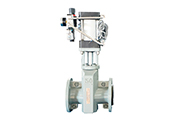
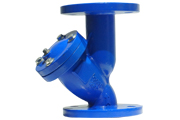
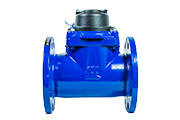
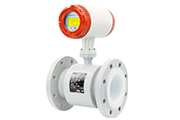
Steam is hot, pressurized, and corrosive — a challenging medium that can damage unsuitable valves, cause leakage, or even endanger system safety.
Many engineers and operators have faced the same problem:
“Why does my valve fail so quickly even though it was rated for high temperature?”
The answer often lies in improper valve selection.

✅ Steam pipelines are used to transport pressurized vapor for:
✔Power generation
✔Heating and HVAC systems
✔Chemical and food industries
✔Boiler and process plants
High temperature (up to 450°C or higher)
High pressure
Condensation and water hammer
Thermal expansion
Corrosion and scaling
Because of these conditions, valves used in steam systems must be robust, precise, and heat-resistant.
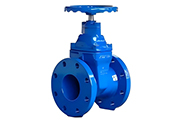
Gate valves are one of the most common isolation valves in steam pipelines.
Function: On/Off control (fully open or closed)
✅ Advantages:
Excellent tightness when fully closed
Minimal pressure loss
Suitable for high-pressure, large-diameter steam lines
✅ Disadvantages:
Not suitable for throttling
Slow to operate
Requires regular lubrication and maintenance
👉 Best choice for:
Main steam lines, isolation between boilers and distribution systems.

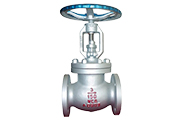
Globe valves are the most recommended for regulating and throttling steam flow.
Function: Precise flow control
✅ Advantages:
Excellent throttling capability
Reliable sealing
Easy to maintain
✅ Disadvantages:
Higher pressure drop
More expensive than gate valves
👉 Best choice for:
Steam control stations, condensate return systems, and pressure regulation applications.

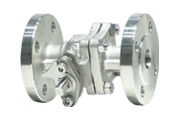
Ball valves are used where quick shut-off and compact design are required.
Function: Fast isolation and on/off control
✅ Advantages:
Quarter-turn operation
Compact and lightweight
Tight sealing performance
Available with fire-safe and metal seats
✅ Disadvantages:
Limited throttling ability
May deform under continuous high-temperature steam
👉 Best choice for:
Small-diameter pipelines, steam distribution manifolds, and auxiliary systems.

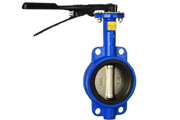
Butterfly valves are an economical choice for low- to medium-pressure steam applications.
Function: On/Off and limited flow control
✅ Advantages:
Compact design and lightweight
Easy installation and operation
Cost-effective for large diameters
✅ Disadvantages:
Limited temperature tolerance
Not ideal for precise control
👉 Best choice for:
Heating systems, HVAC, and non-critical steam lines.

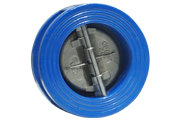
Check valves prevent backflow and protect equipment such as boilers and pumps.
Function: Allows one-way flow only
✅ Advantages:
Automatic operation
Prevents water hammer
Protects equipment from reverse pressure
✅ Disadvantages:
Requires correct installation direction
May stick under dirty conditions
👉 Best choice for:
Condensate lines, boiler outlets, and return lines.

The choice of material directly affects the valve’s safety and longevity.
| Component | Recommended Material | Reason |
| Valve Body | Carbon Steel / Stainless Steel / Alloy Steel | High temperature resistance |
| Seat & Disc | Stainless Steel, Stellite, or Hard Alloy | Prevents erosion and leakage |
| Stem | Stainless Steel | Prevents corrosion |
| Packing | Graphite or PTFE | Ensures tight sealing at high temperature |
👉 Tip: For saturated and superheated steam, use metal-seated valves to withstand temperatures above 400°C.
| Valve Type | Operation | Application | Pressure Range | Key Advantage |
| Gate Valve | On/Off | Isolation of main steam line | High | Minimal pressure loss |
| Globe Valve | Throttling | Flow and pressure control | High | Accurate control |
| Ball Valve | Quick Shut-off | Auxiliary lines | Medium | Fast operation |
| Butterfly Valve | On/Off | HVAC & low-pressure steam | Low-Medium | Economical & lightweight |
| Check Valve | Automatic | Prevent backflow | All | Protects pumps & boilers |
To ensure long-term performance in steam systems:
Install valves vertically or horizontally according to manufacturer direction.
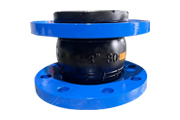
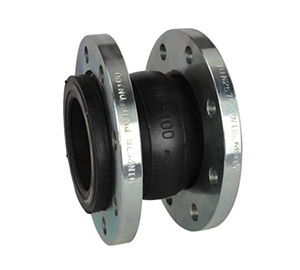
Provide expansion joints to absorb thermal movement.
Use insulation to prevent heat loss.
Avoid installing valves at pipeline low points (to prevent condensate buildup).
Inspect packing and gaskets regularly.
Drain condensate and test operation monthly.
Replace seals if leakage occurs.
Apply high-temperature lubricant to the stem (for gate/globe valves).

| Problem | Cause | Solution |
| Leakage at stem | Worn packing | Replace with graphite packing |
| Valve hard to open | Corrosion or no lubrication | Clean and lubricate stem threads |
| Internal leakage | Seat erosion | Regrind or replace seat |
| Vibrations or water hammer | Poor system design | Install air vents and dampers |
Q1: Which valve is best for high-pressure steam?
👉 Globe or gate valves made of alloy steel with metal seats.
Q2: Can ball valves be used for steam?
👉 Yes, but only metal-seated ball valves rated for high temperatures.
Q3: Are butterfly valves suitable for steam?
👉 Yes, for low-pressure systems (<10 bar).
Q4: What maintenance schedule is recommended?
👉 Inspection every 3–6 months depending on pressure and temperature.
Q5: Can I use PTFE seals in steam valves?
👉 Only for low-temperature steam (<200°C). For higher temperatures, use graphite packing.
At WEIZIDOM, we have been manufacturing and supplying high-quality industrial valves and flow control solutions for over a decade.
✔ Exported to 108+ countries and regions
✔ Over 3000+ global project experiences
✔ 5+ specialized factories in China
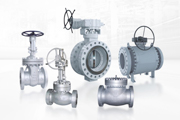
✔ Complete product range – Gate, Globe, Ball, Butterfly, Check, and Control Valves
✔ OEM & ODM support with factory-direct pricing
We provide valve solutions for water, steam, oil, and chemical systems, ensuring safety, efficiency, and durability.
Choosing the correct valve for steam pipelines is essential for system safety, energy efficiency, and operational reliability.
Whether you need isolation, control, or non-return valves, WEIZIDOM offers tailored solutions for your project requirements.
📧 Contact us today: eileen@wsdsolution.com
🌐 Visit: www.wsdsolution.com
🧰 WEIZIDOM – Reliable Flow Control for Every System.