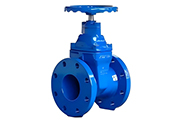
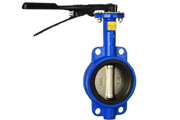
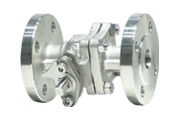
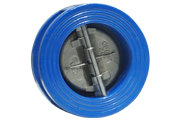
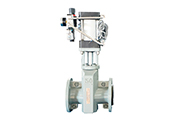
In the world of industrial valves, one design stands apart when the stakes are highest — when the media is corrosive, toxic, high-purity, or laden with solids. Unlike gate, ball, or globe valves that rely on packing glands and metal seats, the diaphragm valve isolates the operating mechanism from the process media entirely. The result? Zero stem leakage, no media entrapment, and exceptional reliability in the harshest environments.
Whether you’re handling concentrated sulfuric acid in a chemical plant, dosing sodium hypochlorite in a wastewater treatment facility, distributing Water for Injection (WFI) in a pharmaceutical plant, or managing seawater cooling on a marine vessel — the diaphragm valve is often the safest, most durable, and most cost-effective choice.
In this guide, we’ll explore:
What a diaphragm valve is and how it works ?
Why it is the preferred valve for corrosive, slurry, and high-purity applications ?
Key advantages over ball valves and gate valves ?
How to select the right materials (F46, PFA, PO) ?
Real-world applications in chemical, petrochemical, marine, biopharma, and mining plants
If you are looking for a valve that combines zero leakage, chemical resistance, and low maintenance, read on.
A diaphragm valve is a linear motion valve that uses a flexible diaphragm to start, stop, or regulate flow. The diaphragm — typically lined with F46 (FEP), PFA, or PO — is clamped between the valve body and bonnet, making it the only wetted component.
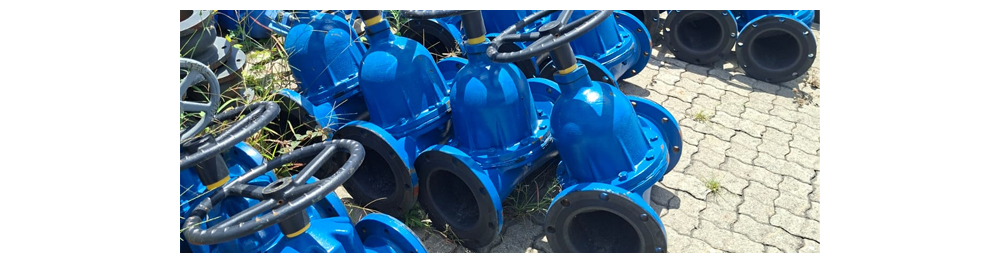
Open position: The diaphragm is lifted away from the weir (weir-type) or fully retracted (straight-through), allowing flow to pass.
Closed position: The diaphragm is pressed down against the weir or seat, creating a bubble-tight seal.
No packing glands, no rotating stem seals — the operating mechanism is completely isolated from the media.
This unique design eliminates fugitive emissions, media entrapment, and metal corrosion — problems that plague traditional valves in aggressive services.
Weir-type: Smooth flow over a raised weir — ideal for general chemical service and throttling.
Straight-through: Unobstructed full bore — ideal for slurries, viscous fluids, and high-purity systems that must be drainable.
At WEIZIDOM, our diaphragm valves are manufactured to GB/T12239, BS5156, and EN13397 standards, with 12-step quality control including 100% high-voltage spark testing of the lining and diaphragm.
The diaphragm valve’s unique characteristics make it indispensable in several critical industries. Below is how it performs in real-world plant environments.
Function: Isolation and dosing of strong acids (HCl, H₂SO₄, HNO₃), alkalis (NaOH), and aggressive solvents.
Why diaphragm? F46/PFA lining provides exceptional chemical resistance. No packing → no fugitive emissions of hazardous chemicals.
Function: Amine systems, sour water strippers, chemical injection.
Why diaphragm? Handles H₂S and CO₂ without metal corrosion. Zero stem leakage prevents environmental release of hydrocarbons.
Function: Seawater cooling, ballast control, scrubber effluent.
Why diaphragm? CF3M (316L) bodies + F46 lining resist saltwater attack. Smooth flow path prevents marine growth accumulation.
Function: Water for Injection (WFI), purified water (PW), clean steam, API transfer.
Why diaphragm? Pocket-free, crevice-free design prevents bacterial growth. Easy to clean (CIP) and sterilize (SIP). No media entrapment — eliminates cross-contamination risk.
Function: Chemical dosing (chlorine, ferric chloride, polymers) and sludge handling.
Why diaphragm? Flexible diaphragm conforms around particles — provides positive shut-off even with solids.
Function: Acid leaching solutions, abrasive mineral slurries.
Why diaphragm? F46/PFA lining resists chemical attack; diaphragm design handles solids without clogging or jamming.

| Application Field | Primary Function | Specific Role in the Plant |
| Chemical Industry | Corrosive media isolation and dosing | Handles strong acids (HCl, H₂SO₄, HNO₃), alkalis (NaOH), and aggressive solvents. The F46/PFA-lined diaphragm and body provide exceptional chemical resistance. Zero stem leakage prevents fugitive emissions of hazardous chemicals. |
| Petroleum / Petrochemical | Sour water, amine, and chemical injection | Isolates flow in amine systems, sour water strippers, and chemical injection lines. The diaphragm design handles media containing H₂S and CO₂ without corrosion. No packing glands means no fugitive emissions in hydrocarbon service. |
| Marine Environments | Seawater cooling and ballast control | Handles seawater, brackish water, and marine scrubber effluents. Corrosion-resistant materials (CF8M/CF3M) resist saltwater attack. Smooth flow path prevents marine growth accumulation. |
| Pharmaceutical & Biotech | High-purity water and clean steam | Used in Water for Injection (WFI), purified water (PW), and clean steam systems. The pocket-free, crevice-free design prevents bacterial growth. Easy to clean (CIP) and sterilize (SIP). No media entrapment — eliminates cross-contamination risk. |
| Wastewater Treatment | Chemical dosing and sludge handling | Controls flow of corrosive chemicals (chlorine, ferric chloride, polymers) and abrasive sludge. The flexible diaphragm conforms around particles — provides positive shut-off even with solids present. |
| Mining & Mineral Processing | Acid leaching and slurry handling | Handles acidic leaching solutions (sulfuric acid) and abrasive mineral slurries. Lined with F46/PFA for chemical resistance; diaphragm design handles solids without clogging or jamming. |
Why diaphragm valves are preferred for these applications: Traditional valves (gate, ball, globe) have packing glands that can leak, cavities that trap media, and metal seats that corrode. The diaphragm valve eliminates all these issues — the diaphragm is the only wetted component, there is no packing to leak, and the smooth flow path prevents media accumulation.
We’ve distilled the diaphragm valve’s strengths into six compelling advantages that plant engineers and procurement professionals value most.
| Advantage | Why It Matters |
| Zero Stem Leakage – No Packing Glands | Eliminates fugitive emissions of hazardous or volatile chemicals. No packing adjustment, no gland leaks — ever. |
| Complete Fluoropolymer Lining (F46 / PFA / PO) | Metal never contacts the process media. Exceptional resistance to strong acids, alkalis, and solvents. |
| Smooth, Pocket-Free Flow Path | No cavities, no dead legs, no media entrapment. Ideal for high-purity (WFI) and slurry applications. |
| Bubble-Tight Shut-Off with Solids Present | Flexible diaphragm conforms around trapped particles, crystals, or fibers — unlike ball or gate valves that jam or leak. |
| Excellent Throttling Capability | Precise flow control for chemical dosing and process regulation — smooth, linear flow characteristic. |
| Lower Cost vs. Exotic Alloy Valves | Provides equivalent or superior corrosion resistance compared to Hastelloy, Titanium, or Monel — at a fraction of the cost. |
Selecting the right diaphragm and lining material is critical for long-term performance.
| Material | Temp. Range | Chemical Resistance | Flexibility | Best For |
| F46 (FEP) | -40°C to +150°C | Excellent | Good | General chemical service — most common |
| PFA | -40°C to +180°C | Superior | Good | High-temperature chemical, aggressive permeation-prone media |
| PO | -20°C to +80°C | Good for alkalis, not for strong solvents | Excellent | Caustic soda (NaOH), cost-sensitive applications |
| Body Material | Equivalent | Best For |
| WCB | Carbon steel | General chemical (requires external coating) |
| CF8 | SS304 | Mildly corrosive environments |
| CF3M | SS316L | Aggressive corrosive, marine, pharmaceutical |
| Feature | Weir-Type | Straight-Through |
| Best for | General chemical, throttling | Slurries, viscous fluids, high-purity |
| Pressure drop | Moderate | Very low |
| Drainability | Good | Excellent (self-draining) |
| Slurry handling | Moderate (weir can trap solids) | Excellent (unobstructed) |
Recommendation: Most chemical applications use weir-type. For slurries, high-purity (WFI/PW), and drainable systems, choose straight-through.
| Parameter | Specification |
| Standards | GB/T12239, BS5156, EN13397 |
| Diameter | DN15 – DN400 (½” – 14″) |
| Pressure | PN6, PN10, PN16, Class 150 |
| Body Materials | WCB, CF8, CF3M (SS316L) |
| Lining/Diaphragm | F46 (FEP), PFA, PO |
| Connections | Flanged (GB, DIN, ANSI) |
| Temperature (F46) | -40°C to +150°C |
| Temperature (PFA) | -40°C to +180°C |
| Vacuum Capable | Yes (with proper diaphragm) |
| CIP/SIP Capable | Yes (pharma/biotech designs) |

| Feature | Diaphragm Valve | Ball Valve | Gate Valve |
| Stem leakage | None | Possible (packing) | Possible (packing) |
| Metal contact with media | None | Yes | Yes |
| Cavities / dead legs | None | Yes | Yes |
| Slurry handling | Excellent | Poor | Poor |
| Corrosive service | Excellent | Good (with lining) | Poor |
| High-purity / pharma | Excellent | Moderate | Poor |
| Throttling | Excellent | Not recommended | Not recommended |
To ensure proper operation of the Diaphragm Valve:
| Installation Guideline | Reason |
| Inspect diaphragm and body lining for damage before installation | Damaged diaphragm or lining exposes metal body to corrosive media — can cause rapid valve failure. High-voltage spark test recommended. |
| Do not overtighten bonnet bolts | Over-compression can damage the diaphragm at the clamping point. |
| Ensure valve is installed with flow direction per manufacturer marking (for weir-type) | Weir-type valves have preferred flow direction for optimal performance and diaphragm life. |
| Do not operate valve without media in the line (dry running) | Diaphragm can be damaged if pressed against weir without liquid cushion — especially with abrasive media. |
| For media with suspended solids, consider straight-through design | Weir-type may trap solids at the weir — straight-through provides unobstructed flow path. |
| For vacuum service, verify diaphragm is suitable | Standard diaphragms may require additional support for full vacuum — consult WEIZIDOM. |
| Replace diaphragm periodically (preventative maintenance) | Diaphragm is a wear part — service life depends on cycle frequency, temperature, and media aggressiveness. |
| Avoid thermal shock (rapid temperature changes) | Lining and diaphragm materials expand/contract differently than metal — rapid changes can cause delamination or cracking. |
| For high-purity / pharmaceutical applications, specify CIP/SIP capable design | Ensure diaphragm and body design allow thorough cleaning and sterilization. |
| Reason | Benefit |
| Zero Fugitive Emissions – No Packing Leaks | The diaphragm fully isolates the bonnet from the process — no stem packing, no gland leaks. Critical for hazardous, toxic, and volatile chemicals. |
| Designed for Corrosive Environments | Full F46/PFA/PO lining and diaphragm provide exceptional resistance to strong acids, alkalis, and aggressive chemicals — the metal body never contacts the process media. |
| GB/T12239 / BS5156 / EN13397 Compliant | Manufactured to recognized diaphragm valve standards — ensures quality, dimensional accuracy, and performance for global projects. |
| Exceptional Diameter Range (DN15–DN400 / ½”–14″) | One supplier for small chemical injection lines to marine and petrochemical mains — consistent quality across all sizes. |
| Handles Slurries & Crystallizing Media | The flexible diaphragm conforms around particles when closing — provides positive shut-off even with suspended solids, crystals, or fibers. |
| Smooth, Pocket-Free Flow Path | No cavities, no dead legs, no media entrapment — ideal for high-purity and slurry applications. Easy to clean (CIP/SIP). |
Contact WEIZIDOM today for a free consultation and no-obligation quote. Tell us your media, temperature, pressure, and connection standard — we will recommend the optimal diaphragm valve for your plant.