In mining, slurries, dry powders, and corrosive tailings destroy ordinary valves within weeks—causing costly downtime and safety risks. Ceramic-lined gate valves and ceramic-lined ball valves are specifically engineered to withstand extreme abrasion, high-temperature ash, and aggressive chemicals. This article explains what these valves are, their critical roles in mining systems, and the key advantages that make them outperform metal and rubber-lined alternatives.
Mining applications involve three killers for standard valves: hard particles (slurry, slag, dry ash), corrosive chemicals (acids, black water, molten slurry), and continuous cycling under pressure. Regular gate or ball valves with metal seats or soft rubber seals quickly erode, leak, or jam.
That is why more mining and mineral processing plants are switching to ceramic-lined valves. By combining a tough metal body (WCB, CF8, CF8M, A105, E304, F316) with an engineered ceramic inner lining, these valves provide exceptional life in services where traditional valves fail.
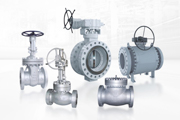
Below we compare two critical types: Ceramic-Lined Gate Valve and Ceramic-Lined Ball Valve—their design, mining applications, and standout features.
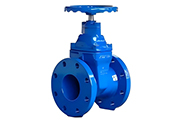
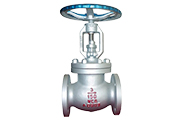
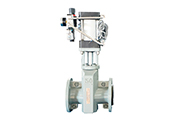
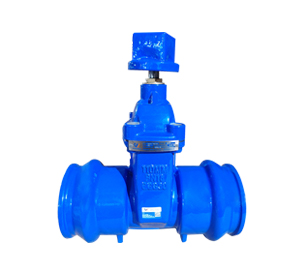
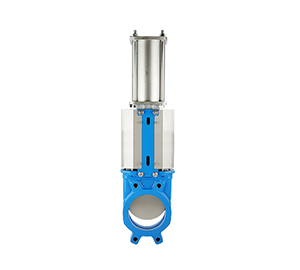
A Ceramic-Lined Gate Valve is a linear-motion valve where a ceramic-coated or solid ceramic gate moves up and down to stop or start flow. The body is made of carbon steel (WCB) or stainless steel (CF8, CF8M), but all wetted parts—including the gate, seat, and flow passage—are lined with high-purity engineering ceramics (typically alumina or zirconia).

Design Standard: JB/T8691-1998
Diameter Range: DN50 – DN1000
Pressure Range: PN10 – PN16
Materials: WCB, CF8, CF8M
Medium examples: Slurry, slag, blast furnace gas ash, dry ash, pulverized coal, cement, granular materials
This valve is not for throttling but for on/off isolation in highly abrasive, dry or wet granular services. The ceramic lining provides a smooth, hard surface (hardness > HRA85) that resists scratching and erosion.
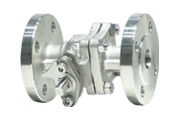
A Ceramic-Lined Ball Valve uses a ceramic ball (sphere) and ceramic seats to control flow via 90° rotation. The ball has a through-hole (full or reduced bore). When aligned with the pipeline, media flows; when turned 90°, the flow stops. The metal body (A105, E304, F316) is lined with ceramic on all internal surfaces.
Design Standard: GB/T12237-2007
Diameter Range: DN20 – DN350
Pressure Range: PN10 – PN64
Materials: A105, E304, F316
Medium examples: Silica powder, coal powder, coal slurry, molten slurry, powdery slurry, asphalt slurry, acid, hydrochloric acid, calcium carbonate, highly corrosive media
Unlike the gate valve, the ball valve offers quick shut-off (quarter-turn) and can be used for both on/off and limited control duties. It is ideal for continuous cycling and applications where zero leakage is critical.

Both valve types serve the mining industry in distinct yet complementary ways.
Mining slurry isolation – Isolating sections of slurry pipelines (e.g., between flotation cells or thickeners).
Power plant ash removal – Handling dry ash, blast furnace gas ash, and slag in coal-fired power plants (often part of mining-adjacent energy facilities).
Coal chemical black water – Blocking or enabling flow of highly abrasive black water containing coal cinders.
Metallurgical slurry – Controlling flow of ore concentrates and tailings containing sharp metal particles.
Highly corrosive slurries – Where acids or alkalis combine with solids (e.g., in hydrometallurgy).
Precise shut-off in abrasive powder service – Silica powder, coal powder (pneumatic conveying lines).
Coal slurry & molten slurry – In coal preparation plants or smelters where temperatures or stickiness are challenges.
New energy material preparation – Handling lithium ore slurries, graphite mixtures, or precursor materials.
High-intensity ash removal – More frequent cycling than gate valves can tolerate.
Harsh corrosive + abrasive conditions – e.g., hydrochloric acid with solid particles in metal refining.
In short: Choose the ceramic gate valve for large-diameter, gravity or low-pressure slurry lines where isolation is needed but not frequent cycling. Choose the ceramic ball valve for smaller pipes, higher pressures (up to PN64), frequent operation, or where tight shut-off against fine powders is required.
Exceptional abrasion resistance – Ceramic hardness (HRA85+) is far superior to metal or rubber, resisting gouging from slag, cement, and coarse slurry.
Large-diameter capability – Available from DN50 up to DN1000, covering main slurry pipelines and ash handling ducts.
Low maintenance in dry ash & granular media – The self-cleaning gate motion prevents material packing (unlike ball valves in dry powders).
Corrosion resistance – Ceramic lining is inert to most acids and alkalis; metal body (CF8, CF8M) adds extra chemical protection.
Longer service life in low-cycle applications – Perfect for isolation that operates only a few times per day, lasting years instead of months.
Cost-effective for high solids concentration – Lower initial cost than exotic alloys in PN10-16 range, with longer lifetime.
| Body Material | Best For | Key Characteristics |
| WCB (Carbon Steel) | General slurry service (neutral pH, non-corrosive) | Cost-effective, good strength — for mining slurries, ash handling, cement |
| CF8 (SS304) | Mildly corrosive slurries, food/mineral processing | Good general corrosion resistance |
| CF8M (SS316) | Highly corrosive slurries (acids, alkalis, chlorides, black water) | Excellent corrosion resistance, molybdenum for chlorides/pitting |
For black water (coal gasification effluent) which is both abrasive and highly corrosive, CF8M body with 99% alumina or zirconia lining is recommended.

Quick quarter-turn operation – Allows fast emergency shut-off or automated cycling (ideal for PLC-controlled mining processes).
Higher pressure rating – PN10-64 vs PN10-16 of gate valve, suitable for deeper slurry lines or pneumatic conveying.
Tight shut-off even with fine powders – Silica powder, coal dust, and even molten asphalt slurry – the ceramic ball and seat lap to a near-leak-proof seal.
Excellent for corrosive + abrasive media – Withstands hydrochloric acid, calcium carbonate slurry, and acidic coal slurry simultaneously.
Wide material selection – Body can be A105 (carbon steel), E304, or F316 (stainless) for matching pipeline metallurgy.
Smooth ceramic flow path – Reduces pressure drop and prevents caking or sticking of sticky media like molten or asphalt slurry.
| Body Material | Equivalent | Best For | Key Characteristics |
| A105 | Carbon Steel | General slurry service (neutral pH, non-corrosive) | Cost-effective, good strength — for coal slurry, silica powder, ash handling |
| E304 | SS304 | Mildly corrosive slurries, food/mineral processing | Good general corrosion resistance |
| F316 | SS316 | Highly corrosive slurries (acids, hydrochloric acid, black water, chlorides) | Excellent corrosion resistance, molybdenum for chlorides/pitting |
For hydrochloric acid slurry and other highly corrosive chemical slurries, F316 (SS316) body with 99% alumina or zirconia lining is strongly recommended.
If you are handling large-diameter, low to medium pressure slurries, dry ash, or slag with infrequent operation → Ceramic-Lined Gate Valve is your reliable, cost-effective choice.
If you need smaller pipe size, higher pressure (up to PN64), frequent cycling, or tight shut-off against fine powders and corrosive liquids → Ceramic-Lined Ball Valve is the superior solution.
Both valves dramatically reduce downtime, spare parts consumption, and safety risks compared to unlined metal or rubber-lined alternatives.
📩 Contact WEIZIDOM for Project Cooperation
Interested in high-quality valves, pipes, or custom fluid solutions for your agricultural or water project?
👉 Email: eileen@wsdvalves.com
🌐 Website: https://www.wsdvalves.com