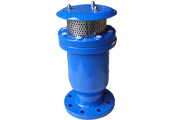
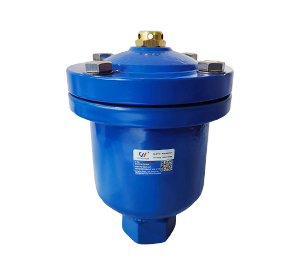
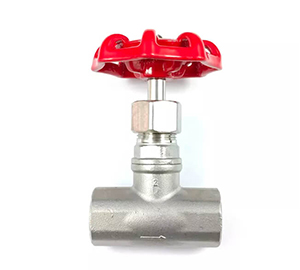
A Compound Triple-Function Air Release Valve is a specialized automatic valve designed for air management in pressurized water pipelines.
The exhaust valve is used at the highest point of the pipeline or the place where the air is closed and at the outlet of the pump to drain the gas in the pipeline to dredge the pipeline. Make the pipe reach normal working! If the exhaust valve is not installed, the pipeline will appear at any time, so that the outlet capacity of the pipeline can not meet the design requirements!
Secondly: when the pipeline is in operation, there will be a power failure to stop the pump, and there will be negative pressure which will cause the pipeline to vibrate or rupture. At this time, the air inlet valve will quickly suck the air into the pipe to prevent the pipeline from vibrating and rupture to play a protective role.
The compound exhaust valve must be provided with two holes, one large and one small. The large hole and the diameter hole are basically the same. There will be a large amount of gas to be discharged from the water pipe for the first time. When the gas after the row, macroporous stop exhaust pipe tube will naturally gasbag body during normal operation, the airbag gradually form a bigger focus on the top of the pipe, thus forming gas resistance, impact of pipeline water can not meet the design requirements, the vent holes will have the effect of the exhaust in, the gas will have holes to solve discharge, make the pipe is no gas! When a large amount of air is needed in the pipeline, the floating ball drops with the water and opens the small hole to drive the large hole to carry out a large amount of air intake to ensure the safety of the pipeline!

| Function | Description |
| Large-Volume Air Release (at startup) | During pipeline filling, the valve automatically releases large volumes of air to allow efficient filling and prevent air locks. |
| Large-Volume Air Intake (during drainage) | During pipeline emptying or when pressure drops, the valve opens to admit large volumes of air, preventing vacuum collapse and pipe damage. |
| Automatic Small-Volume Air Release (under pressure) | While the pipeline is under normal operating pressure, the valve continuously releases small pockets of accumulated air that cause inefficiency and noise. |
The term “Compound” refers to the combination of two distinct mechanisms within a single valve body: a large orifice (float-operated) for high-volume air release/intake, and a small orifice (lever/float-operated) for continuous automatic release of accumulated air under pressure.
This valve is designed specifically for water supply and drainage systems, operating automatically without the need for manual intervention or external power.
At WEIZIDOM, our Compound Triple-Function Air Release Valves are manufactured to EN1074 design standards with strict quality control, ensuring reliable air management in critical water pipeline systems.
In water supply and drainage systems, the Compound Triple-Function Air Release Valve serves as an essential air management device that protects pipelines, improves efficiency, and extends system life.
| Function | Description |
| Preventing Air Locks During Filling | When a pipeline is filled with water, trapped air can create air locks that block flow, cause pressure surges, and prevent complete filling. The valve automatically releases this trapped air, allowing smooth, complete pipeline filling. |
| Preventing Vacuum Collapse During Drainage | When a pipeline is drained or a pump stops, rapid water outflow can create a vacuum that collapses pipes (especially large-diameter thin-wall pipes). The valve automatically opens to admit air, equalizing pressure and preventing pipe collapse. |
| Releasing Accumulated Air Under Pressure | Dissolved air in water comes out of solution due to pressure drops, temperature changes, or turbulence — accumulating at high points. These small air pockets reduce flow capacity, cause noise, accelerate corrosion, and can lead to pressure surges. The valve automatically releases these pockets without losing water. |
| Reducing Pressure Surges (Water Hammer) | Air trapped in pipelines can compress and expand, contributing to damaging pressure surges. Proper air release minimizes water hammer risk during pump starts, stops, and valve operations. |
| Improving Pump Efficiency | Air in pump suction lines reduces pump efficiency and can cause cavitation. By removing entrained air, the valve helps maintain optimal pump performance. |
| Protecting Flow Meters and Other Equipment | Air passing through flow meters causes inaccurate readings and potential damage. Installing air release valves upstream of sensitive equipment ensures accurate measurement and protects instrumentation. |
✔ Municipal water transmission mains (at high points)
✔ Pump station discharge lines
✔ Long-distance water supply pipelines
✔ Gravity-fed water supply systems
✔ Wastewater force mains
✔ Large-diameter drainage pipelines
✔ Peaks and high elevation points in pipeline profiles
✔ Upstream of flow meters and control valves
✔ Downstream of pumps and pressure reducing valves

WEIZIDOM’s Compound Triple-Function Air Release Valve is engineered specifically for water supply and drainage applications, combining three critical functions in one reliable, low-maintenance package.
| Feature | Advantage |
| Three Functions in One Valve | Combines large-volume air release (filling), large-volume air intake (drainage), and automatic small-volume air release (under pressure) in a single unit — eliminates the need for multiple valves at each air management point. |
| EN1074 Compliance | Designed and tested to EN1074 standard for valves in water supply systems — ensures performance, durability, and safety for municipal water applications. |
| Ductile Iron (DI) Construction | High-strength ductile iron body provides excellent mechanical properties, impact resistance, and durability — ideal for buried or above-ground water pipeline installations. |
| Optimized Diameter Range | Available from DN50 to DN200 — covers the most common air valve sizes for water supply and drainage branch lines and medium-sized mains. |
| Multiple Pressure Ratings | Supports PN10, PN16, and PN25 — suitable for low to medium-high pressure water systems (e.g., gravity lines, distribution mains, pumped lines). |
| Large Orifice for High-Volume Air Flow | Large-diameter orifice (float-operated) handles substantial air volumes during pipeline filling and emptying — significantly reduces filling time and prevents vacuum damage. |
| Small Orifice for Continuous Air Release | Independent small orifice (lever/float mechanism) continuously releases accumulated air pockets while the pipeline is under normal operating pressure — without losing water. |
| Automatic Operation | Fully automatic — no external power, manual intervention, or control system required. The valve responds to water level changes inside the valve body. |
| Dual-Float Mechanism | Separate floats control the large and small orifices, ensuring reliable operation under all pipeline conditions — from empty to fully pressurized. |
| Vacuum Protection | When internal pressure drops below atmospheric, the large orifice opens instantly to admit air — prevents pipeline collapse and protects against vacuum damage. |
| Anti-Slam Design | Engineered to close smoothly without slamming or creating pressure surges when the water level rises — prevents water hammer from the valve itself. |
| Debris-Resistant Operation | Large flow passages and robust float design resist fouling from typical waterborne debris — reduces maintenance frequency in real-world water systems. |
| Corrosion Protection | Ductile iron body with fusion-bonded epoxy coating (internal and external) provides excellent corrosion resistance for buried or wet environments. |
| Easy Maintenance | Simple top-entry design allows access to internal components (floats, levers, orifices) without removing the valve from the pipeline. |
| Reliable Sealing | Precision-machined orifice seats and durable float seals provide positive shut-off when closed, preventing water leakage under pressure. |
| Compact Design | Vertically oriented body requires minimal space — easy to install at pipeline high points, even in valve chambers or pits. |
| Rigorous Quality Control | Each valve undergoes 12 tests from raw material to final product, including float operation tests, pressure sealing tests, and air flow capacity tests. |
| Reason | Benefit |
| Designed Specifically for Water Supply & Drainage | Engineered to handle the specific challenges of water pipelines — not a generic industrial valve adapted for water service. |
| EN1074 Certified | Meets European water supply valve standards — trusted for municipal and infrastructure projects worldwide. |
| Three Critical Functions in One Valve | Reduces installation points, maintenance requirements, and overall system cost compared to using separate air/vacuum valves and automatic air release valves. |
| Protects Pipeline Investment | Prevents vacuum collapse (which can destroy large-diameter pipes), reduces water hammer risk, and minimizes internal corrosion — extending pipeline life. |
| Improves Hydraulic Performance | Removing trapped air increases flow capacity, reduces pumping energy costs, and ensures accurate flow meter readings. |
| One-Stop Solution | We supply air release valves together with gate valves, butterfly valves, pipe fittings, water meters, and flow meters for complete water system integration. |

| Parameter | Specification |
| Design Standard | EN1074 |
| Diameter Range (DN) | DN50 – DN200 |
| Pressure Ratings (PN) | PN10 / PN16 / PN25 |
| Applicable Medium | Water (clean water, raw water, potable water) |
| Body Material | Ductile Iron (DI) |
| Internal Components | Brass / Stainless Steel / Engineered Polymer (depending on component) |
| Floats | High-buoyancy, corrosion-resistant material |
| Seals | EPDM (suitable for potable water) |
| End Connections | Flanged (EN1092 / ISO 7005) or Threaded (depending on size and customer requirement) |
| Orifice Type | Compound — large orifice (air release/intake) + small orifice (automatic air release under pressure) |
| Operation | Fully automatic — no external power required |
| Minimum Operating Pressure | 0.2 bar (for small orifice automatic release function) |
| Maximum Operating Pressure | PN10 / PN16 / PN25 (as ordered) |
| Temperature Range | 0°C to +50°C (standard water applications) |
| Coating | Fusion-Bonded Epoxy (minimum 250μm) — internal and external |
| Mounting Orientation | Vertical (upright) only |
| Installation Location | At pipeline high points, peaks, and changes in slope |
Customized options (special coatings, larger diameters, different end connections) available upon request.
To ensure proper operation of the Compound Triple-Function Air Release Valve:
| Installation Guideline | Reason |
| Install at all high points in the pipeline profile | Air naturally migrates to high points — this is where air valves are most effective. |
| Install vertically (upright) only | The float mechanism requires vertical orientation to function correctly. |
| Install an isolation valve (gate valve or butterfly valve) below the air valve | Allows removal for maintenance without draining the entire pipeline. |
| Ensure adequate clearance above the valve | For access during maintenance and for proper air discharge. |
| Protect from freezing | Install in a valve chamber or insulate if the pipeline is in a freeze-prone area. |
| Do not install directly at pump discharges without anti-slam protection | Consult WEIZIDOM for special configurations if installation at pump discharge is required. |
When the valve after strict inspection and installation, should be in a good working state, and ready to operate.
Note: the exhaust valve in the use of the pressure should not be lower than 0.02Mpa, such as lower than 0.02Mpa exhaust valve easy to leak, the valve must be equipped with a valve for maintenance! If no obvious problems are found in the operation performance of the valve, the actual test can be carried out with pressure while the sealing performance and operation performance are checked.
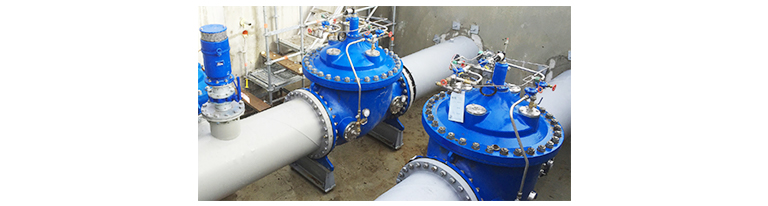
Valve is a kind of special product which has both moving parts and wear parts.
In order to obtain satisfactory performance of the valve, it is necessary to protect the finished surface of some parts for a long time. The valve has a continuous service life of not less than five years under normal operating conditions and in accordance with pressure, medium and temperature. The maintenance requirements of the valve should consider not only the accidental opening and closing of the valve, but also the fact that the valve is under pressure for most of the time.
Valves that remain in one position for a long period of time may experience a decrease in maneuverability to some extent due to aging rubber, surface corrosion of the float, or harmful accumulation.
The integrity of the bearing boundary is mainly required to keep the bearing parts intact, to fix the bearing seal at the assembly joint, and to ensure an effective working seal between the moving float ball and the rubber surface in most cases. Pressure boundaries and fixed assembly connections should be checked frequently to ensure that they are in good condition.
The external design of the valve is generally easy to inspect and maintain. Reasonable measures should be taken to prevent mechanical damage to the valve and to prevent erosion of the valve by atmospheric sediment, chemical substances or damp gas to worsen its quality.