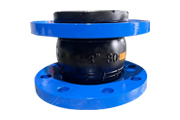
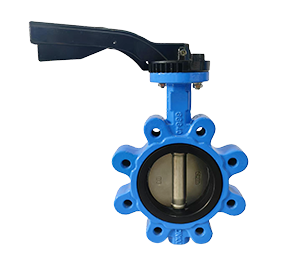
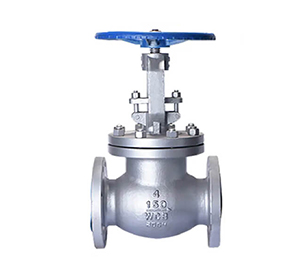
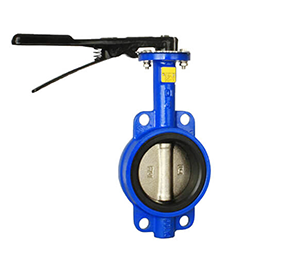
In modern piping systems, rigid metal connections cannot handle the complex forces of vibration, thermal expansion, and misalignment. Over 42% of pipeline leakage issues trace back to incorrect rubber joint selection or substandard manufacturing. The rubber joint—also known as a rubber expansion joint, flexible joint, or shock absorber—serves as the essential flexible link that protects pumps, valves, and compressors from stress damage. From municipal water supply networks to offshore oil platforms, this seemingly simple component plays an irreplaceable role in system reliability and safety.
A rubber joint (also called a flexible rubber expansion joint or rubber bellows) is a flexible pipe connector composed of a rubber body reinforced with high-strength fabric layers (typically nylon cord) and equipped with metal flanges. The rubber body—available in materials such as EPDM, NBR, Neoprene, and FKM—is designed to absorb vibration, accommodate axial and lateral movement, and compensate for thermal expansion or pipeline misalignment.

| Parameter | Details |
| Design Standard | GB/T 26121-2010 |
| Diameter Range | DN25 – DN2000 |
| Pressure Range | 0.6 – 2.5 MPa |
| Medium | Water, sewage, warm water |
| Rubber Material | EPDM |
| Body/Flange Material | Ductile iron and stainless steel |
Rubber joints act as shock absorbers, effectively reducing vibration and noise caused by pumps, compressors, and fluid flow. This protects equipment, extends service life, and creates a quieter working environment.
Compensation for Thermal Expansion and Misalignment
Rubber joints absorb axial compression/extension, lateral displacement, and angular deflection—accommodating pipeline movement caused by temperature fluctuations and ground settlement without stressing the system.
EPDM rubber offers excellent resistance to aging, heat, steam, and ozone. It withstands hot water (up to 100°C), municipal wastewater, and mild chemicals without degradation.
Unlike throttling devices, rubber joints maintain a smooth flow path with minimal pressure loss, ensuring efficient system operation.
Lightweight construction and standard flange drilling allow simple bolt-in installation. With periodic visual inspections, rubber joints typically provide 5–10 years of reliable service.
The following table illustrates how rubber joints contribute to each application and why they are the only practical solution.
| Industry / Application | Role of Rubber Joint | Why Irreplaceable |
| Water Supply & Treatment | Absorbs water hammer from pump startup/shutdown; compensates for ground settlement in buried pipelines; protects meters and valves from stress. | Only flexible joint can handle the combination of vibration, pressure surges, and settlement without failure. Rigid connections break or leak. |
| HVAC Systems | Compensates for thermal expansion in chilled/hot water pipes; isolates vibration from chillers and boilers; reduces noise transmission to building structure. | Metal expansion joints are too rigid and costly for building services. Rubber joints provide the only economical, noise-damping solution. |
| Chemical Processing | Handles mild corrosive media with EPDM or specialty rubbers; protects pumps and reactors from pipeline stress. | Chemical-resistant metals (e.g., Hastelloy) are prohibitively expensive for flexible joints. Rubber provides the only cost-effective corrosion-resistant flexibility. |
| Food & Beverage | Sanitary-grade EPDM (WRAS/ACS approved) for potable water and food processing; smooth internal surface prevents bacterial growth. | Only food-grade rubber meets safety standards while providing necessary flexibility. No metal alternative offers the same compliance and performance. |
| Oil & Gas | Compensates for thermal expansion in pipeline systems; isolates vibration from compressors; absorbs offshore platform movement. | Metal bellows fail from fatigue in high-vibration offshore environments. Rubber’s damping properties extend service life where metal cannot survive. |
| Medium | Recommended Rubber | Key Reason |
| Cold/hot water, HVAC | EPDM | Resists aging, heat (to 100°C), and steam; TÜV-certified for heating systems |
| Sewage, wastewater | EPDM | Resists microbial corrosion and ozone degradation |
| Oil, fuel, grease | NBR | Excellent oil resistance |

Inspect before installation: Check for damage to rubber body or flanges.
Align flanges properly: Bolts must be tightened in a star pattern to ensure even compression; do not over-tighten.
Never use as pipe end: Rubber joints require full pipe support—do not use as an end cap.
Outdoor protection: Use EPDM materials for UV resistance; add protective covers or sunshades for long-term outdoor exposure.
Limit devices for high vibration: For high-frequency pumps or compressors, use rubber joints with limit rods or tie rods to prevent pull-off.
Choosing rubber material based only on cost → leads to rapid chemical degradation
Ignoring system movement requirements → joint pulls apart or fails
No limit device in high-vibration environment → premature joint failure
| Application Field | Typical Scenarios |
| Water Supply & Treatment | Pump outlets, water distribution, wastewater systems |
| HVAC Systems | Heating and cooling pipe loops, chiller connections |
| Chemical Processing | Corrosive media, chemical feed lines |
| Food & Beverage | Sanitary processing, food-grade pipelines (EPDM / PTFE-lined) |
| Fire Protection | Firewater supply lines, pump connections |
| Power Generation | Cooling water systems, condenser connections |
| Oil & Gas | Compressed air, gas lines, utility piping |
Stainless steel flanged rubber joints are particularly suited for pipelines subject to vibration or thermal displacement settlement, effectively solving leakage problems and ensuring safe, reliable operation.

| Application | Primary Function | Common Pipe Size Range |
| Water Supply & Drainage | Buffer water hammer, absorb settlement | DN50 – DN1200 |
| HVAC Systems | Thermal expansion compensation, noise reduction | DN50 – DN600 |
| Chemical Processing | Corrosion-resistant flexible connection | DN25 – DN400 |
| Food & Beverage | Sanitary flexible connection for potable liquids | DN25 – DN200 |
| Oil & Gas | Vibration isolation, offshore platform movement compensation | DN50 – DN800 |