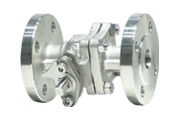
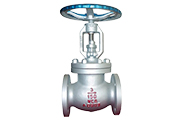
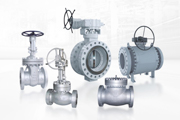
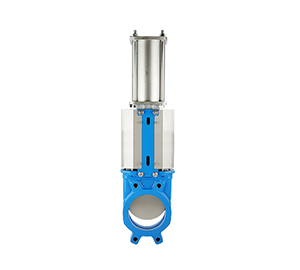
In the world of fluid control, stainless steel valves are indispensable. They offer an unmatched combination of strength, corrosion resistance, and long-term reliability that makes them the preferred choice for industries ranging from chemical processing and petrochemicals to food and beverage, pharmaceuticals, and marine engineering.
Selecting the wrong stainless steel valve—or the wrong type of stainless steel—can lead to premature failure, safety hazards, and costly downtime. The distinction between, for example, 304 and 316L stainless steel, can mean the difference between a valve that lasts decades and one that fails within months in chloride-rich environments.
This guide provides a comprehensive overview of the most common stainless steel valve types—Gate, Butterfly, Check, Globe, Ball Valves, and Strainers—detailing their ideal applications, key advantages, and critical selection criteria. We also cover the essential material-grade decision: 304 vs. 316L vs. other stainless steel alloys.

The most important decision when selecting a stainless steel valve is choosing the correct material grade. The two most common options are 304 (CF8) and 316 (CF8M / 316L) stainless steel, but they have very different performance characteristics.
| Characteristic | 304 Stainless Steel (CF8) | 316/316L Stainless Steel (CF8M/CF3M) |
| Key Alloying Elements | 18% Chromium, 8% Nickel | 16-18% Chromium, 10-14% Nickel, 2-3% Molybdenum |
| Corrosion Resistance | Good for general, non-chloride environments | Excellent; superior resistance to chlorides, pitting, and crevice corrosion |
| Best For | Fresh water, steam, mild acids/alkalis, dry solvents, general industrial service | Seawater, brine, chemical processing, aggressive acids, marine environments, high-chloride conditions |
| Key Limitation | Unsuitable for seawater or high-chloride environments (risk of pitting) | Higher cost, but superior lifecycle value in corrosive service |
| Common Applications | Food processing, building water systems, moderate chemical service | Petrochemical, pharmaceutical, marine, offshore, desalination |
| Cost | Lower | Higher (but prevents early failure) |
The most reliable rule of thumb is: if your media contains chlorides (Cl⁻) at concentrations exceeding 200 ppm, choose 316L. For many freshwater and general industrial applications, 304 may be perfectly adequate and more cost-effective.
The following six valve types are the most common in stainless steel construction. Each serves a specific function and is suited to different applications.
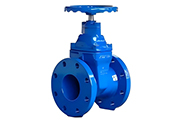
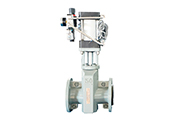
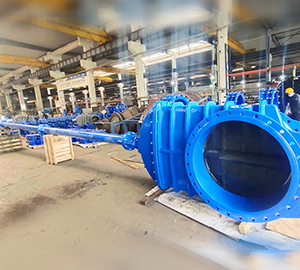
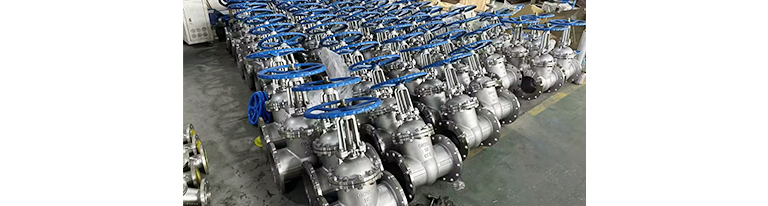
Function: Primarily for on/off isolation in pipelines. Gate valves are designed to be either fully open or fully closed and offer minimal flow resistance when open.
Best Applications:
* Water and wastewater treatment
* Steam and oil systems (for infrequent operation)
* Isolation for pump stations and plant piping
Key Advantage: When fully open, the gate retracts completely, creating virtually no pressure drop . It is an excellent choice for low-pressure drop isolation where infrequent operation is required.
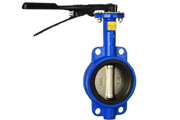
Function: Designed for on/off and throttling service for large flows of gases and liquids at low to medium pressures.
Best Applications:
* Large-diameter water lines
* HVAC systems
* Cooling water and process control
* Fire protection systems
Key Advantages: The valve features a straight-through, open-disc design that prevents solids buildup and yields low pressure drop . Its compact, lightweight wafer body saves space between flanges and makes it a cost-effective solution for large pipelines.
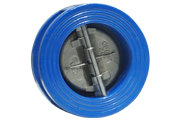
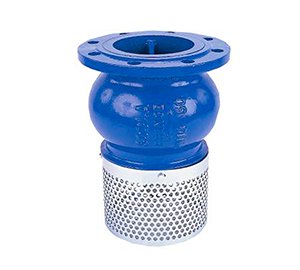
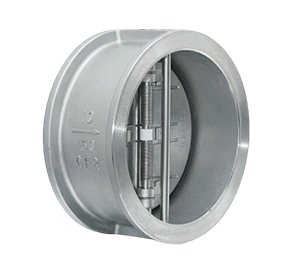
Function: An automatic one-way valve that allows flow in one direction only, preventing backflow (reverse flow) to protect pumps and equipment.
Best Applications:
* Pump discharge lines
* Protecting flow meters from reverse flow
* Systems where backflow would cause contamination or damage
Key Advantages: Swing check valves offer very low pressure drop, while spring-loaded or silent check valves provide rapid closure to minimize water hammer. Stainless steel construction ensures corrosion resistance in aggressive fluids, and 316L is preferred for marine or chemical service.

Function: Designed primarily for precise flow throttling and regulation.
Best Applications:
* Chemical dosing and injection systems
* Cooling water and steam regulation
* Process control where accurate flow adjustment is required
Key Advantage: The linear motion of the disc perpendicular to the seat allows for excellent throttling control, which is superior to ball or gate valves . They are not ideal for systems with high solids content, but offer good shut-off capability.

Function: A versatile valve for on/off and moderate throttling with a quick quarter-turn (90°) operation.
Best Applications:
* Chemical transfer and processing
* Viscous fluids and slurries
* Gas and oil pipelines
* Sanitary and food-grade processes
Key Advantages: They provide a positive, bubble-tight shut-off. The flow path is unobstructed, making them suitable for viscous fluids and slurries, and the quarter-turn operation enables fast emergency shut-off .

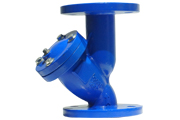
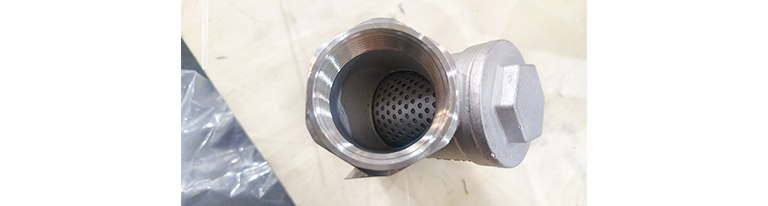
Function: Not a valve for controlling flow, but a protective device. A Y-strainer uses a perforated screen to remove dirt, debris, and scale from the fluid, protecting downstream equipment like pumps and valves.
Best Applications:
* Upstream of pumps, control valves, and flow meters
* Chemical processing lines
* Steam and water systems
* Food and beverage processes
Key Advantage: The Y-body design allows for easy removal of the screen for cleaning without removing the entire strainer from the line. Stainless steel construction is crucial for corrosion resistance in aggressive media .
Stainless steel valves are manufactured using either casting or forging processes. The choice affects cost and performance.
Process: Molten metal is poured into a mold.
Best for: Large-diameter valves (e.g., DN100+), complex shapes, and lower-pressure applications.
Cost: More economical for large sizes.
Process: Solid steel is shaped under high pressure.
Best for: Small-diameter, high-pressure, and high-temperature applications.
Cost: Higher cost, but offers superior strength, denser grain structure, and better resistance to thermal and mechanical fatigue. Forged valves are generally preferred for critical and severe service.
A systematic selection process is essential to ensure the right valve for the application. Consider these parameters in order:
Media Composition: Identify all chemicals, their concentrations, and especially the presence of chlorides (Cl⁻). This will be the primary driver for your material grade decision.
Operating Temperature: Ensure the chosen material and seat/seal (e.g., PTFE, FKM, EPDM) can handle both continuous and peak temperatures. 316L is better for high temperatures, and low temperatures may require impact-tested materials.
Pressure Rating: The valve’s pressure class (e.g., Class 150, 300) must meet or exceed the system’s maximum operating pressure.
Sealing Requirements: Select appropriate sealing materials (PTFE for acids, FKM for high temperatures, FDA-approved elastomers for food/pharma).
Valve Function: Clearly define whether the valve is for isolation, throttling, or backflow prevention, and choose the valve type accordingly.
| Valve Type | Best Function | Typical Industries | Key Grade Recommendation |
| Gate Valve | On/Off Isolation (Infrequent) | Water, steam, oil, power | 304 for fresh water; 316L for corrosive or high-temp |
| Butterfly Valve | On/Off & Throttling (Large flows) | Water, HVAC, process | 304/316L depending on media; 316L for seawater |
| Check Valve | Backflow Prevention | Pump stations, water, chemical | 316L for marine/chemical, 304 for general water |
| Globe Valve | Precise Throttling & Regulation | Dosing, steam, process control | 316L for aggressive chemical service |
| Ball Valve | On/Off (Fast operation) | Chemical, viscous fluids, gas | 316L for chloride-rich or acidic media |
| Y-Strainer | Debris Removal (Protection) | Upstream of sensitive equipment | 304 or 316L depending on fluid corrosivity |
Stainless steel valves offer exceptional durability and performance in demanding applications. The key to a successful selection is a clear understanding of the fluid being handled—its corrosivity, temperature, and pressure—and selecting both the correct valve type and the correct grade of stainless steel. While 304 is a cost-effective choice for fresh water and mild service, 316L is the gold standard for corrosive, marine, and chloride-rich environments due to its molybdenum content.