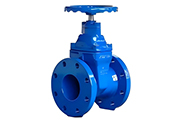
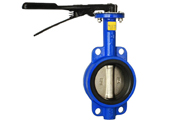
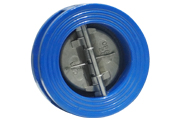
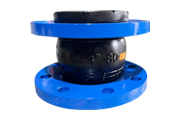
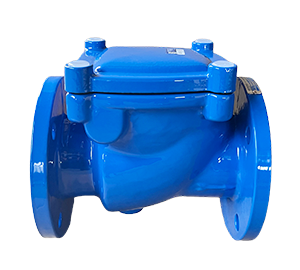
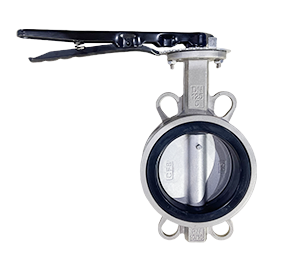
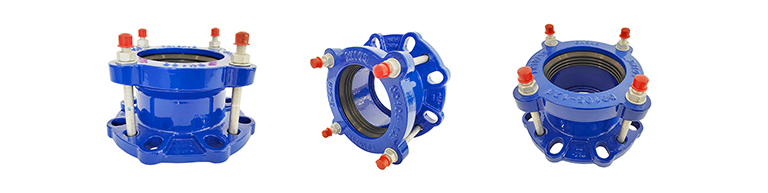
A Flange Adaptor (also known as a flanged coupling adapter or plain-end to flange connector) is a specialized pipe fitting designed to connect plain-ended (non-flanged) pipes to flanged equipment, valves, or fittings without the need for welding, threading, or field-fabricated flange stub ends.
Body: A ductile iron cylindrical housing with an integral flange on one end
Gland / retainer ring: A bolted ring on the plain-end side that compresses the sealing elements
Elastomeric sealing rings: EPDM or NBR rubber rings that provide leak-tight sealing around the inserted pipe
Tie rods / connection bolts: Bolts that connect the adaptor to the mating flange
Backing ring / gripper ring (optional): Provides axial restraint, preventing the pipe from pulling out under pressure
The operating principle is simple and effective: the plain end of a pipe (cut square and deburred) is inserted into the adaptor’s socket end. As the gland bolts are tightened, the gland compresses the sealing rings against the pipe, creating a pressure-tight seal. The integral flange on the opposite end then bolts directly to a valve, pump, or other flanged equipment.
The key advantage of a flange adaptor is that it eliminates the need for welded or threaded flange connections — allowing plain pipe to be quickly and reliably connected to flanged components using only basic hand tools.
At WEIZIDOM, our Flange Adaptors are manufactured to EN545 design standards with strict quality control (12 tests from raw material to final product), ensuring reliable, leak-free plain-end to flange connections for water supply and drainage systems.
Design Standard: EN545
Diameter range: DN40-DN2600
Pressure range: PN10-PN25
Medium: Water
Material: Ductile iron
Application fields: Water supply and drainage
In water supply and drainage systems, the Flange Adaptor serves as an essential connection device that simplifies the attachment of plain-ended pipes to flanged equipment.
Its primary functions include:
| Function | Description |
| Connecting Plain Pipe to Flanged Valves | Allows gate valves, butterfly valves, check valves, and control valves to be installed on plain-ended ductile iron, steel, or PVC pipes without welding or threading the pipe end. |
| Connecting Plain Pipe to Flanged Pumps | Simplifies pump installation by providing a ready-made flange connection on plain suction or discharge piping — no field fabrication required. |
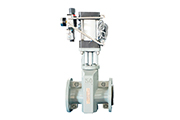
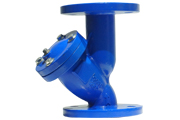
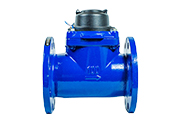
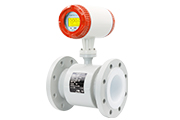
| Connecting Plain Pipe to Flanged Meters & Equipment | Enables water meters, strainers, pressure reducing valves, and other flanged equipment to be connected to plain pipe quickly and economically. |
| Eliminating Field Welding or Threading | Removes the need for specialized labor, hot work permits, welding equipment, or pipe threading machines — reduces installation cost and accelerates project timelines. |
| Providing Pipe-to-Flange Transition in Retrofits | When existing plain pipe must be connected to new flanged equipment, the flange adaptor provides a simple, non-destructive connection method. |
| Allowing Future Disconnection | Flange adaptor connections can be unbolted and disassembled — unlike welded or cemented joints, they permit future equipment replacement without cutting pipe. |

| Application | Specific Use |
| Valve Installation | Connecting plain-ended pipe to flanged gate valves, butterfly valves, and check valves |
| Pump Station Piping | Attaching plain suction/discharge pipes to flanged pump nozzles |
| Water Meter Connections | Installing flanged water meters onto plain pipe ends |
| Treatment Plant Pipework | Connecting plain process pipe to flanged equipment |
| Retrofit Projects | Adapting existing plain pipe to new flanged equipment |
| Temporary or Emergency Repairs | Quick connection of plain replacement pipe to existing flanged components |
| Irrigation Systems | Connecting plain PVC or steel pipe to flanged valves and backflow preventers |
WEIZIDOM’s Flange Adaptor is engineered specifically for water supply and drainage pipeline systems, providing simple, reliable plain-end to flange connections.
Below are its outstanding features and advantages:
| Feature | Advantage |
| EN545 Compliance | Manufactured to European standard for ductile iron pipes, fittings, and joints — ensures dimensional accuracy, material quality, and performance reliability for water supply applications. |
| Exceptional Diameter Range (DN40–DN2600) | Covers everything from small building service lines (DN40) to ultra-large water transmission mains (DN2600) — a single product family for projects of all sizes. |
| Pressure Range PN10–PN25 | Suitable for standard to medium-high pressure water systems — covers typical water supply and drainage pressure conditions (distribution mains to transmission lines). |
| Ductile Iron Construction | High-strength ductile iron body provides excellent mechanical properties, impact resistance, and durability — ideal for buried or above-ground water pipeline installations. |
| No Welding or Threading Required | Connects plain-ended pipe to flanged equipment using only simple hand tools — eliminates hot work, specialized labor, and reduces installation time by 50–80%. |
| Compression-Sealed, Leak-Free Joint | EPDM sealing rings provide reliable, bubble-tight sealing around the inserted pipe — accommodates minor pipe surface irregularities and maintains seal under pressure. |
| Flange Adaptor | Flexible Joint |
| Primary purpose: Connect plain-ended pipe to flanged equipment (valves, pumps, meters) | Primary purpose: Provide angular deflection and axial movement to accommodate pipeline settlement, thermal expansion, and ground shifting |
| Movement capability: Minimal (installation-only adjustment; not designed for ongoing movement) | Significant movement capability: Angular deflection (3°–15°), axial movement (±10–25mm), and rotational freedom |
| Typical installation location: At equipment connections (valves, pumps, meters) | Typical installation location: Along pipeline length (at regular intervals or at settlement-prone areas) |
| Connection type: One end: plain pipe socket; Other end: integral flange | Connection type: Both ends: plain pipe socket, or socket-to-flange, or flange-to-flange |
| Primary benefit: Eliminates welding/threading; allows quick connection of plain pipe to flanged equipment | Primary benefit: Protects pipeline from stress caused by settlement, thermal change, and seismic movement |

To ensure proper operation of the Flange Adaptor:
| Installation Guideline | Reason |
| Cut the pipe end square and remove all burrs | A clean, square pipe end ensures proper sealing ring contact and prevents damage to the elastomer. |
| Mark the insertion depth on the pipe | Prevents over-insertion or under-insertion — both can affect seal performance. |
| Lubricate the pipe end and sealing rings (with approved lubricant) | Reduces insertion force and prevents ring damage during installation. |
| Tighten gland bolts evenly in a cross pattern | Ensures uniform gasket compression and prevents leakage. |
| Do not over-tighten bolts | Over-compression can damage sealing rings and reduce seal life. |
| For restrained versions, ensure gripper rings are properly oriented | Gripper rings are directional — incorrect orientation reduces pull-out resistance. |
| Support the pipe adequately near the adaptor | Prevents excessive bending moments on the adaptor body. |
| For buried installations, provide corrosion protection on exposed bolts | Use stainless steel bolts or apply appropriate coating/wrapping. |