The Complete Guide to Pipeline Connections: Dismantling Joints, Flexible Joints, and Flange Adaptors
In the world of water supply and drainage, ensuring a leak-free, durable, and maintainable pipeline system is a top priority for engineers and contractors. However, connecting plain-ended pipes to flanged equipment, accommodating ground movement, and facilitating maintenance often present significant challenges.
To solve these issues, three specialized EN545 ductile iron fittings are widely used: the Flange Adaptor, the Flexible Joint, and the Dismantling Joint. While they may look similar and all play critical roles in pipeline infrastructure, they serve entirely different purposes.
Selecting the wrong fitting can lead to pipe stress, equipment damage, or costly installation delays. This guide breaks down the specific functions and advantages of each to help you make the right choice for your next project.
Flange Adaptor: The Plain-End to Flange Connector
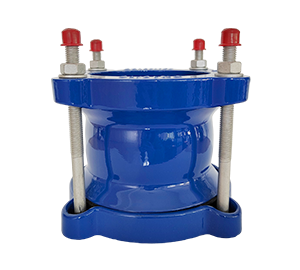
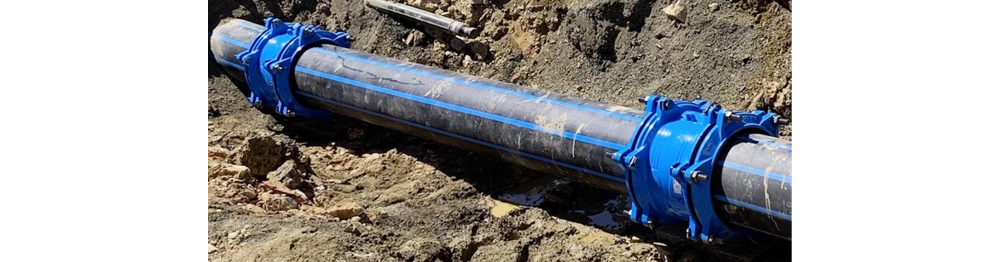
What is it?A Flange Adaptor is designed to connect plain-ended (non-flanged) pipes to flanged equipment, such as valves, pumps, or water meters, without the need for welding or threading.
Key Features & Advantages:
No Hot Work Required: Eliminates the need for welding equipment, specialized labor, and hot work permits. Installation time is reduced by 50-80%.
Compression Sealed: EPDM sealing rings provide a reliable, bubble-tight seal around the inserted pipe, accommodating minor surface irregularities.
Future Disconnection: Unlike welded joints, flange adaptor connections can be unbolted, allowing for future equipment replacement without cutting the pipe.
Wide Range: Available from DN40 to DN2600, handling pressures from PN10 to PN25.
When to Use It:Use a Flange Adaptor when you need to connect a plain PVC, steel, or ductile iron pipe directly to a flanged valve, pump, or meter. It is the perfect solution for retrofits, temporary repairs, or any application where welding is impractical.
Main Function in Water Systems
In water supply and drainage systems, the Flange Adaptor serves as an essential connection device that simplifies the attachment of plain-ended pipes to flanged equipment.
Its primary functions include:
| Function |
Description |
| Connecting Plain Pipe to Flanged Valves |
Allows gate valves, butterfly valves, check valves, and control valves to be installed on plain-ended ductile iron, steel, or PVC pipes without welding or threading the pipe end. |
| Connecting Plain Pipe to Flanged Pumps |
Simplifies pump installation by providing a ready-made flange connection on plain suction or discharge piping — no field fabrication required. |
| Connecting Plain Pipe to Flanged Meters & Equipment |
Enables water meters, strainers, pressure reducing valves, and other flanged equipment to be connected to plain pipe quickly and economically. |
| Eliminating Field Welding or Threading |
Removes the need for specialized labor, hot work permits, welding equipment, or pipe threading machines — reduces installation cost and accelerates project timelines. |
| Providing Pipe-to-Flange Transition in Retrofits |
When existing plain pipe must be connected to new flanged equipment, the flange adaptor provides a simple, non-destructive connection method. |
| Allowing Future Disconnection |
Flange adaptor connections can be unbolted and disassembled — unlike welded or cemented joints, they permit future equipment replacement without cutting pipe. |
Typical applications within water supply and drainage include:
| Application |
Specific Use |
| Valve Installation |
Connecting plain-ended pipe to flanged gate valves, butterfly valves, and check valves |
| Pump Station Piping |
Attaching plain suction/discharge pipes to flanged pump nozzles |
| Water Meter Connections |
Installing flanged water meters onto plain pipe ends |
| Treatment Plant Pipework |
Connecting plain process pipe to flanged equipment |
| Retrofit Projects |
Adapting existing plain pipe to new flanged equipment |
| Temporary or Emergency Repairs |
Quick connection of plain replacement pipe to existing flanged components |
| Irrigation Systems |
Connecting plain PVC or steel pipe to flanged valves and backflow preventers |
Flexible Joint: The Dynamic Movement Absorber
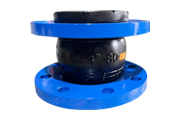
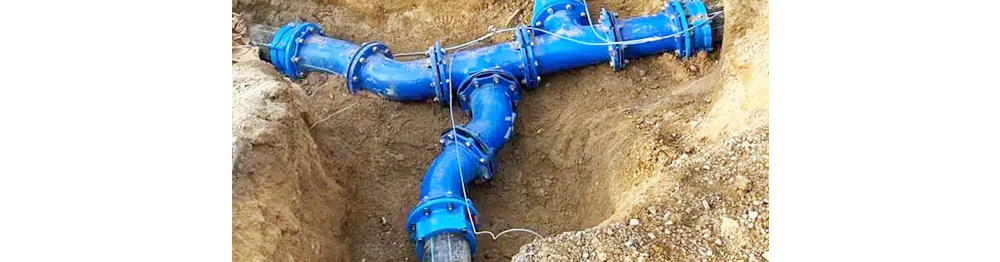
What is it?A Flexible Joint (or flexible coupling) is designed to provide ongoing angular deflection and axial movement while maintaining a pressure-tight seal. It accommodates misalignment, pipe settlement, thermal expansion, and ground shifting.
Key Features & Advantages:
Multi-Directional Movement: Provides angular deflection (typically 3° to 15°), axial movement (±10–25mm), and rotational freedom.
Stress Protection: Isolates valves, pumps, and meters from pipeline stress caused by ground settlement or thermal changes, preventing binding or breakage.
Seismic & Ground Movement Protection: Allows pipelines to move with ground shifts without separating or bursting, maintaining service during seismic events.
Leak-Free Reliability: Multiple EPDM sealing rings maintain integrity even under maximum deflection.
When to Use It:Use a Flexible Joint along pipeline lengths, especially in areas prone to ground settlement, unstable soils, seismic zones, or at bridge and river crossings. It is also highly recommended for connecting equipment that must be isolated from pipeline vibration or movement.
Main Function in Water Systems
In water supply and drainage systems, the Flexible Joint serves as a movement-accommodating connection device that protects pipelines from stress, settlement, and thermal forces.
Its primary functions include:
| Function |
Description |
| Compensating for Pipe Settlement |
Over time, pipe bedding can settle unevenly, causing pipes to shift vertically. Flexible joints allow angular deflection to accommodate settlement without creating bending stresses that could crack pipes or damage joints. |
| Accommodating Thermal Expansion & Contraction |
As water temperature changes, pipelines expand and contract. Flexible joints absorb these length changes without imposing compressive or tensile forces on pipe flanges, valves, or thrust blocks. |
| Tolerating Minor Installation Misalignment |
Pipelines are rarely perfectly straight. Flexible joints allow angular and axial adjustment during installation — eliminating the need for custom-bent pipes or multiple special fittings. |
| Protecting Valves and Equipment from Pipeline Stress |
Rigid connections transmit pipeline movement directly to valves, pumps, and meters — potentially causing binding, leakage, or breakage. Flexible joints isolate equipment from pipeline forces. |
| Enabling Pipeline Bends Without Special Fittings (Angular Deflection) |
For slight directional changes (e.g., 3°–10°), flexible joints can be deflected to create a gradual bend — reducing the need for elbow fittings and minimizing pressure loss. |
| Providing Seismic and Ground Movement Protection |
In earthquake-prone or unstable soil areas, flexible joints allow pipelines to move with ground shifts without separating or bursting — maintaining water service during and after seismic events. |
Typical applications within water supply and drainage include:
| Application |
Specific Use |
| Pipeline Crossings (bridges, roads, railways) |
Allows pipeline to flex with bridge movement or traffic-induced vibration |
| Valve and Equipment Connections |
Protects gate valves, butterfly valves, and check valves from pipeline stress |
| Pump Station Suction & Discharge Piping |
Isolates pumps from building settlement and thermal movement |
| River and Canal Crossings |
Accommodates pipeline movement due to water level changes and bank settlement |
| Seismic Zones |
Provides earthquake-resistant pipeline connections |
| Areas with Expansive or Unstable Soils |
Allows pipeline to move with ground swelling and settlement |
| Treatment Plant Interconnecting Pipework |
Connects different structures that may settle independently |
| Reservoir and Tank Connections |
Accommodates movement between buried pipe and above-ground tank structures |
Dismantling Joint: The Maintenance & Installation Enabler
What is it?A Dismantling Joint (or breakout joint) provides adjustable length and flange connection flexibility. It allows valves and equipment to be easily installed, removed, or replaced without cutting pipes or disturbing pipeline alignment.
Key Features & Advantages:
Adjustable Length: Provides an axial adjustment range (typically 50–200mm) to bridge gaps between fixed flange faces and compensate for installation tolerances.
Easy Valve Removal: When a valve needs replacement, the joint can be compressed to create clearance, allowing the valve to be lifted out effortlessly.
Integral Tension Rod System: Heavy-duty tie rods provide both length adjustment and mechanical retention, preventing separation under pressure.
Flange Adaptability: Can connect pipes with different flange drilling standards (e.g., EN1092 to ANSI) when special configurations are provided.
When to Use It:Use a Dismantling Joint upstream or downstream of critical valves, pumps, and flow meters. It is essential for pump stations, water treatment plants, and any location where regular maintenance or equipment replacement is expected.
How to Choose the Right Fitting
To make the right selection, ask yourself these three questions:
Are you connecting a plain pipe to a flange? Choose a Flange Adaptor.
Does the pipeline need to accommodate dynamic movement (settlement, thermal, seismic)? Choose a Flexible Joint.
Do you need to easily remove a valve or equipment without cutting the pipe? Choose a Dismantling Joint.
Why Choose WEIZIDOM?
At WEIZIDOM, we manufacture all three fittings to strict EN545 design standards, ensuring dimensional accuracy, material quality, and performance reliability. Our products feature:
Exceptional Diameter Range: DN40 to DN2600 for projects of all sizes.
Pressure Range: PN10 to PN25.
Ductile Iron Construction: High strength, impact resistance, and durability for buried or above-ground installations.
Strict Quality Control: 12 tests from raw material to final product.
Don’t let pipeline connections slow down your project. Choose the right fitting and partner with a manufacturer you can trust.
For expert assistance in selecting the right joint for your specific water system application, contact WEIZIDOM today for a no-obligation consultation and quote.