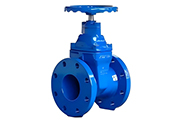
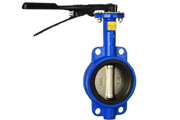
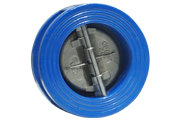
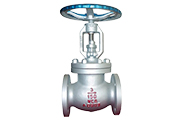
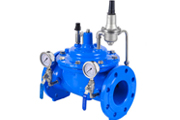
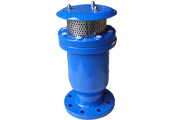
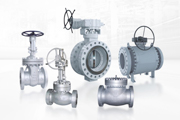
In water supply and drainage pipeline systems, one of the most persistent challenges engineers face is the need to remove, repair, or replace valves, pumps, and other flanged equipment without cutting into rigid piping. Without a flexible solution, even a simple valve replacement becomes a major undertaking requiring pipe cutting, welding, or re-alignment.
The dismantling joint—also known as a breakout joint or repair flange adapter—solves this problem elegantly. This specialized pipe fitting provides adjustable length and flange connection flexibility, allowing pipes, valves, pumps, and other equipment to be easily installed, removed, repaired, or replaced without disturbing the existing pipeline alignment .
Manufactured to EN545 standards in ductile iron with fusion-bonded epoxy coating, dismantling joints are essential components for water supply and drainage systems ranging from DN40 to DN2600, with pressure ratings from PN10 to PN25 . This comprehensive guide covers everything you need to know about dismantling joints—their design, functions, features, installation best practices, and maintenance requirements.
A dismantling joint is a specialized pipe fitting that provides adjustable length and flange connection flexibility in pipeline systems. It is designed to facilitate the easy installation, removal, and replacement of flanged equipment such as valves, pumps, flow meters, and strainers without cutting pipes or disturbing the existing pipeline alignment.
The dismantling joint consists of several key components that work together to provide axial adjustment and leak-tight sealing:
| Component | Function |
| Outer sleeve (body) | Cylindrical ductile iron housing with one fixed flange |
| Inner sliding piece | Telescoping component that slides inside the outer sleeve |
| Gland and sealing rings | Compressible elastomeric seals (EPDM/NBR) that prevent leakage while allowing axial movement |
| Tie rods / connecting bolts | Threaded rods (Grade 8.8 galvanized steel) that connect the dismantling joint to the adjacent flange and control the extended length |
| Adjusting nuts / thrust nuts | Nuts on the tie rods that allow precise length adjustment |
The dismantling joint operates on a simple telescopic principle: by loosening the tie rod nuts, sliding the inner piece to the desired position, and retightening, the joint can be lengthened or shortened to suit the installation requirements. This axial adjustability—typically 50 mm depending on size —provides the flexibility needed to:
* Bridge the gap between two fixed flange faces
* Allow removal of valves or equipment without moving pipes
* Compensate for minor installation misalignments
* Accommodate thermal expansion and contraction
| Parameter | Details |
| Design Standard | EN545 |
| Diameter Range | DN40 – DN2600 |
| Pressure Range | PN10 – PN25 (PN40 available upon request) |
| Medium | Water, drinking water, sewage water, seawater, effluent |
| Material | Ductile iron (GGG50 / GJS-500-7) |
| Coating | Fusion-bonded epoxy coating, thickness ≥250μm |
| Seals | EPDM / NBR rubber gaskets |
| Tie Rods | Grade 8.8 galvanized carbon steel or stainless steel |
In water supply and drainage systems, the dismantling joint serves as an essential installation and maintenance device. Its primary functions include :
When a gate valve, butterfly valve, check valve, or other equipment needs replacement, the dismantling joint can be shortened to create clearance—allowing the valve to be lifted out without cutting the pipeline or moving adjacent pipes . Without this capability, valve replacement would require cutting into the pipeline, adding costly downtime and labor.
Pipelines and equipment are rarely positioned with perfect accuracy. The dismantling joint provides 50 mm of axial adjustment to accommodate real-world installation variations—eliminating the need for custom-cut pipe spools .
Dismantling joints connect pipes with different flange drilling standards (e.g., EN1092 to ANSI, or PN10 to PN16) when special configurations are provided—simplifying procurement and reducing adapter requirements .
In long pipelines subject to temperature changes, dismantling joints with appropriate tie rod configuration can accommodate thermal expansion and contraction—reducing stress on flanges, valves, and pipe supports.
When installing pumps or other flanged equipment, the dismantling joint allows fine adjustment of the connection length—ensuring bolt holes align perfectly and flanges mate without stress.
In the event of a damaged valve or gasket, the dismantling joint can be quickly adjusted to remove and replace the component—minimizing system downtime and water service interruption .
| Application Field | Specific Use |
| Valve Installation | Upstream/downstream of gate valves, butterfly valves, check valves, and control valves |
| Pump Station Connections | Allows pump removal for maintenance or replacement without cutting suction/discharge piping |
| Water Treatment Plant Pipework | Provides flexibility in rigid pipeline systems with multiple flanged components |
| Flow Meter Installations | Allows meter removal for calibration, cleaning, or replacement |
| Desalination Plants | Used extensively for fast and safe installation of valves, strainers, and flow meters |
| Retrofit and Expansion Projects | Bridges gaps between existing pipeline flanges and new equipment |
WEIZIDOM’s dismantling joints are engineered specifically for water supply and drainage pipeline systems, providing installation flexibility and maintenance access.
| Feature | Advantage |
| EN545 Compliance | Manufactured to European standard for ductile iron pipes, fittings, and joints—ensures dimensional accuracy, material quality, and performance reliability for water supply applications |
| Exceptional Diameter Range (DN40–DN2600) | Covers everything from small building service lines to ultra-large water transmission mains—a single product family for projects of all sizes |
| Pressure Range PN10–PN25 | Suitable for standard to medium-high pressure water systems—covers typical water supply and drainage pressure conditions |
| Ductile Iron Construction | High-strength ductile iron body provides excellent mechanical properties, impact resistance, and durability—ideal for buried or above-ground water pipeline installations |
| Adjustable Length Design | Provides significant axial adjustment range (typically 50 mm) allowing easy installation, valve removal, and compensation for installation tolerances without special tools |
| Integral Tension Rod System | Heavy-duty tie rods with adjusting nuts connect the dismantling joint to the adjacent flange—provides both length adjustment and mechanical retention, preventing separation under pressure |
Proper installation is critical to ensure long-term performance of the dismantling joint. Follow these guidelines:
| Step | Action |
| 1 | Inspect the dismantling joint for transport or storage damage. Protect against dirt with an appropriate cover during storage |
| 2 | Check mating flanges to ensure they match the flange drilling of the dismantling joint. Raised face flange ends cannot be mated to flat face flange ends |
| 3 | Review application and chemical compatibility of the operating fluid to the materials of construction |
| 4 | Ensure the pipeline is pressureless and free from any tensions and electric current before installation |
Step 1: Position the Joint
Place the dismantling joint into position avoiding contact or impact with other equipment .
Step 2: Loosen End Ring Nuts
Loosen the end ring nuts to allow the flange adapter to move freely within the flange coupling body .
Step 3: Install Flange Threaded Rods
Install standard flange threaded rods through remaining holes in flanges. Evenly tighten the threaded rods around the flange by diametrically alternating opposite positions at approximately 35 Nm increments until the recommended torque has been achieved. Wait ten minutes and retighten the bolts.
Step 4: Center the Pipe Spool
Once both flange joints are assembled and properly tightened, ensure the pipe spool is centered between the flanged coupling bodies.
Step 5: Tighten End Ring Nuts
Tighten the end ring nuts evenly by alternating to diametrically opposite positions .
Step 6: Pressure Test
Pressure test for leaks before backfilling .
* Bolts not tightened to the proper torque
* Rocks or debris between the spool and gasket
* Dirt on threads of bolts or nuts
* Not enough pipe insertion
* Incorrect mating flange
* Not having the spool piece centered
* Over-tightened rod nuts
Maintenance and Servicing
Dismantling joints are durable and dependable in operation, requiring very little maintenance during their life cycle . However, regular inspection is recommended:
Under extreme operating conditions, inspection needs to be done at shorter intervals
The seals can be replaced, if required, depending on the type of fluid conveyed
Safety Precautions
Prior to any inspection and maintenance work:
Shut off the pressurized pipeline
Relieve the pressure
Secure the system against unintentional switching on
| Parameter | Details |
| Product Type | Dismantling Joint / Breakout Joint / Repair Flange Adapter |
| Design Standard | EN545 |
| Diameter Range | DN40 – DN2600 |
| Pressure Rating | PN10, PN16, PN25 (PN40 on request) |
| Body Material | Ductile Iron (GGG50 / GJS-500-7) |
| Coating | Fusion-bonded epoxy, ≥250μm |
| Seals | EPDM / NBR rubber |
| Tie Rods | Grade 8.8 galvanized steel or stainless steel |
| Axial Adjustment | 50 mm (typical) |
| Main Function | Enables installation/removal of flanged equipment without pipe cutting |
| Typical Applications | Water supply, drainage, pump stations, treatment plants, desalination |
The dismantling joint is an indispensable component in modern water pipeline systems. Its ability to provide axial adjustment and flange connection flexibility simplifies installation, enables easy removal of flanged equipment, and dramatically reduces maintenance downtime.
By choosing a high-quality EN545-compliant dismantling joint in ductile iron with fusion-bonded epoxy coating—such as those supplied by WEIZIDOM—engineers and contractors can ensure reliable, long-lasting performance across a wide range of water supply and drainage applications.