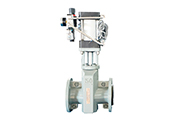
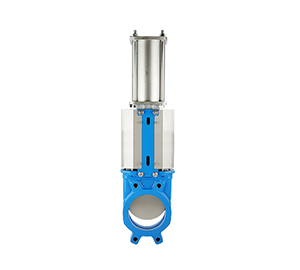
In mining and industrial processing, few challenges are as persistent as handling abrasive slurries, particle-laden fluids, and crystallizing media. Conventional metal valves—gate, ball, and globe designs—rapidly erode, jam, or leak when confronted with these punishing conditions. Their internal cavities trap solids, their metal seats wear away, and their packing glands fail, leading to costly downtime and maintenance .
The Pneumatic Pinch Valve offers a fundamentally different approach. Instead of relying on metal-to-metal sealing or complex internal mechanisms, the pinch valve uses a flexible rubber sleeve as the only wetted component. Compressed air squeezes the sleeve shut, completely blocking flow—even when solids are trapped inside . The result is a valve that is clog-resistant, self-cleaning, abrasion-proof, and maintenance-friendly, making it indispensable in mining, wastewater, and chemical processing.
This guide covers the working principle, key advantages, mining applications, and critical material selection criteria for pneumatic pinch valves—helping engineers and procurement professionals choose the right valve for their most challenging media.
A Pneumatic Pinch Valve is a fully enclosed, straight-through flow control valve that uses compressed air pressure to pinch a flexible rubber sleeve (inner tube) shut, thereby stopping or regulating the flow of media. Unlike traditional valves with complex internal mechanisms—gates, balls, discs, or seats—the pinch valve has no internal cavities, no packing glands, and no metal parts in contact with the flow media. The flexible sleeve is the only wetted component .

| Parameter | Details |
| Design Standard | Q/JBGN02 |
| Diameter Range | DN20 – DN600 |
| Pressure Range | 0.1 MPa – 1.0 MPa |
| Media | Slurry, silt, sewage, crystallizing media |
| Housing Materials | Aluminum alloy, cast iron, cast steel, 304, 316L |
| Applications | Media containing particles, relatively turbid, may crystallize |
The operating principle is simple and effective:
The valve consists of a housing body (aluminum alloy, cast iron, cast steel, 304, or 316L) and a flexible rubber sleeve (the pinch tube)
Compressed air is introduced into the annular space between the housing and the sleeve
When pneumatic pressure is applied, the sleeve is pinched closed—completely blocking the flow path
When pneumatic pressure is released, the sleeve returns to its open position due to its natural elasticity and/or the pressure of the flowing media
The valve can be used for on/off isolation or proportional throttling (by modulating the air pressure)
The pinch valve’s unique design delivers six critical advantages over conventional metal valves:
Only the rubber sleeve touches the process media. The housing body never contacts the flow, eliminating corrosion, erosion, and contamination risks .
No obstructions, no cavities, no pressure drop when fully open. Large solids pass through freely without clogging .
The pinching action crushes and dislodges any build-up inside the sleeve. Each closure cycle breaks up crystals, dislodges debris, and prevents material accumulation .
No metal parts to wear, jam, or corrode. The rubber sleeve absorbs impact from sharp particles and resists chemical attack .
Full closure even with solids present. The flexible sleeve conforms around trapped particles, ensuring complete sealing where metal valves would leak .
Only the rubber sleeve is a wear part; replacement is quick and inexpensive. No packing glands to adjust, no seats to replace, no metal components to repair .
In the mining industry, the Pneumatic Pinch Valve serves as a reliable, clog-resistant isolation device for abrasive, particle-laden, and crystallizing media. Its primary functions include:
| Function | Description |
| Slurry Isolation | Safely stops and starts the flow of mineral slurries (ore, tailings, concentrate)—the pinch action crushes any solids in the sleeve, ensuring complete closure even with particles trapped inside |
| Tailings Control | Isolates or regulates flow in tailings disposal lines—the rubber sleeve resists abrasion from sharp rock particles where metal valves would erode rapidly |
| Silt & Sediment Handling | Controls flow of silt-laden water in settling ponds, thickeners, and clarifiers—the straight-through, full bore design prevents clogging and settling inside the valve |
| Crystallizing Media Isolation | Handles media that may crystallize or solidify (e.g., brine, certain chemical slurries)—the pinching action breaks up crystals and prevents the valve from becoming stuck |
| Sewage & Effluent Control | Isolates or regulates flow in mine sewage and effluent lines—the self-cleaning action prevents rag-balling and debris accumulation common in gate or ball valves |
| Process Throttling for Slurry Density Control | With proportional pneumatic control, the pinch valve can regulate flow to maintain desired slurry density in cyclones, thickeners, or flotation circuits—provides smooth, clog-free throttling |
| Application Field | Specific Use |
| Mineral Processing | Ore slurry feed to mills, flotation cell feed/tailings, cyclone feed lines, concentrate lines |
| Tailings Management | Tailings disposal lines, thickener underflow, tailings dam distribution |
| Dewatering & Filtration | Filter feed, filter discharge, centrifuge feed, thickener overflow/underflow |
| Sludge & Silt Handling | Settling pond discharge, clarifier sludge, sediment removal lines |
| Wastewater Treatment | Mine sewage lines, effluent lines, sludge transfer, chemical sludge |
| Chemical Processing (Mining) | Leach pad solution lines, solvent extraction feed/raffinate, crystallizer feed/discharge |
| Slurry Transport Pipelines | Long-distance slurry pipelines, booster station isolation |
The rubber sleeve is the heart of the pinch valve—and the correct sleeve material determines performance, service life, and reliability. The following table summarizes the key options:
| Sleeve Material | Best For | Temperature Range | Abrasion Resistance | Chemical Resistance |
| Natural Rubber | Slurries, sand, gravel, water-based media | -50°C to +80°C | Excellent | Poor (not for oils/chemicals) |
| EPDM | Dilute acids, alkalis, water treatment, sewage | -40°C to +120°C | Good | Good for mild chemicals |
| NBR (Buna-N) | Oily slurries, petroleum-based media | -30°C to +100°C | Good | Excellent for oils, fuels |
| Neoprene | Moderate chemicals, weather/ozone resistance | -35°C to +100°C | Good | Good for moderate chemicals |
| Hypalon (CSM) | Strong acids, oxidizing chemicals, outdoor exposure | -20°C to +120°C | Good | Excellent for strong chemicals |
| Viton (FKM) | High-temperature chemicals, strong acids/solvents | -20°C to +180°C | Good | Excellent chemical resistance |
Key Recommendation: For highly abrasive slurries (e.g., taconite, copper ore, sand), natural rubber sleeves provide the best abrasion resistance. For chemical service, select EPDM, Hypalon, or Viton based on the specific media .
The housing provides structural support and contains the pneumatic pressure. Material selection depends on the service environment:
| Housing Material | Best For | Key Characteristics |
| Aluminum Alloy | Lightweight, general mining service, cost-effective | Lightweight, corrosion-resistant (with coating), good for indoor and protected installations |
| Cast Iron | Heavy-duty, abrasive service, high cycle life | High strength, good abrasion resistance, durable—for demanding mining environments |
| Cast Steel | High pressure, high temperature, severe service | Highest strength, suitable for higher pressures and temperatures |
| 304 Stainless Steel | Corrosive mining environments | Good corrosion resistance for moderate chemical exposure |
| 316L Stainless Steel | Highly corrosive mining environments (strong acids, chlorides, seawater) | Excellent corrosion resistance, molybdenum for chloride/pitting resistance |
In mining applications where abrasion, clogging, and crystallization are constant threats, the pinch valve offers capabilities that no metal valve can match:
| Challenge | How Pinch Valve Solves It |
| Abrasive Slurry | Rubber sleeve absorbs impact; no metal parts to erode |
| Clogging | Full-bore, straight-through design; no cavities for solids to accumulate |
| Crystallization | Pinching action breaks up crystals; self-cleaning with each cycle |
| Rag & Fibrous Debris | Sleeve closes around debris; no stem or seat to wrap around |
| Corrosion | Only the rubber sleeve contacts media; housing is isolated |
| Frequent Cycling | Sleeve replacement is quick and inexpensive; no metal wear parts |
When selecting a pneumatic pinch valve for your mining application, consider:
| Parameter | Key Question |
| Media Type | Is the media abrasive, corrosive, crystallizing, or fibrous? |
| Temperature | What is the continuous and peak operating temperature? |
| Pressure | What is the maximum line pressure and required pneumatic pressure? |
| Sleeve Material | Which rubber compound best matches the media? |
| Housing Material | What material suits the external environment and required pressure rating? |
| Actuation | Is on/off or proportional control required? |
| Cycle Frequency | How often will the valve operate? |
| Maintenance Access | Is sleeve replacement accessible? |

The Pneumatic Pinch Valve is the definitive solution for mining and industrial applications involving abrasive slurries, silt, sewage, and crystallizing media. Its unique design—where the rubber sleeve is the only wetted component—eliminates the clogging, erosion, and corrosion problems that plague conventional metal valves. With proper sleeve and housing material selection, the pinch valve delivers reliable, maintenance-friendly performance in the most demanding conditions.
For mining operations seeking a clog-free, self-cleaning, abrasion-resistant isolation valve, the pneumatic pinch valve is not just an option—it is the standard.
For expert assistance in selecting the right pneumatic pinch valve for your specific mining application—including sleeve material selection, housing options, and actuation configuration—contact WEIZIDOM’s technical team for a no-obligation consultation.