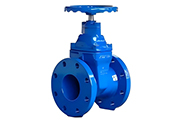
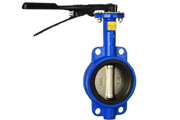
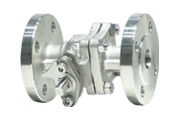
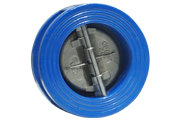
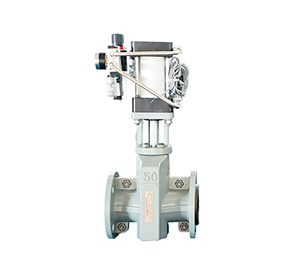
Preventing backflow is a critical requirement in many piping systems, especially where potable water, chemicals or process fluids are at stake. Two commonly used devices are the single check valve and the double check valve assembly. At first glance they look similar — both allow flow in one direction and block it in reverse — but their design details, reliability and typical applications differ significantly. Choosing the right option reduces contamination risk, lowers maintenance cost and ensures compliance with local codes.
A check valve is a one-way device that allows fluid to flow forward while preventing reverse flow.
Its simplest forms include:
✅ Swing check valve: A hinged disc swings open with forward flow and closes under reverse pressure. Common in larger pipelines.
✅ Lift or piston check valve: A guided disc or piston lifts off a seat to allow flow and drops back to seal on reverse flow — suitable for vertical installations.
✅ Spring (compression) check valve: A spring forces the disc to close; useful where quick closure is needed to avoid backflow or water hammer.
How it works: Under forward flow, fluid pressure forces the closure element away from its seat. When flow slows or reverses, gravity, spring force or back pressure pushes the closure back against the seat to form a seal.
Advantages of a single check valve
✔ Simplicity and low cost.
✔ Low maintenance for many applications.
✔ Compact footprints (especially wafer and spring types).
✔ Minimal pressure drop in full-bore designs.
👉 Limitations
A single element represents a single point of failure—if its seat or spring is fouled, the device may leak.
Not always sufficient for cross-connection protection or potable water backflow prevention where codes require redundancy.

A double check valve assembly (DCVA) consists of two check valves in series, often with test ports and shutoff valves on both ends. This redundancy increases reliability and provides a level of protection suitable for many low-to-medium hazard applications.
How it works: If the first check leaks or sticks, the second check serves as a backup barrier. Test ports allow field testing and verification that both checks operate properly.
👉 Key benefits
Redundancy: Two closure elements mean much higher probability of preventing backflow even if one component fails.
Testability: Modern DCVAs are designed with test cocks and isolation valves, enabling routine compliance testing (common requirement in plumbing codes for potable water protection).
Wider code acceptance: Many jurisdictions accept DCVAs for reduced hazard backflow prevention where devices with more complex mechanisms (like reduced pressure zone assemblies) are not required.
👉 Limitations
Slightly higher pressure drop and cost compared to a single check valve.
More components to maintain and test.
Not always suitable for high hazard applications—some systems still require a reduced pressure principle device (RPZ) for significant contamination risk.
| Consideration | Single Check Valve | Double Check Valve Assembly |
| Typical application | Pump discharge, drainage, simple non-potable lines | Potable water cross-connections, irrigation, service lines where testing is mandated |
| Redundancy / safety | Single point of protection | Redundant barrier (better safety) |
| Testability | Usually limited/no test ports | Designed for in-situ testing and code compliance |
| Pressure loss | Lower (simple designs) | Slightly higher due to two sequential elements |
| Cost | Lower | Moderate (higher than single check) |
| Maintenance | Simpler | Requires periodic testing & maintenance of both checks |
Flow direction & orientation — Select a valve type suitable for the line orientation (vertical vs horizontal). For vertical upward flow, lift check valves may be preferred.
Cracking pressure & spring rate — For spring check valves, choose cracking pressures appropriate to your system to avoid unwanted resistance at low flows.
Material compatibility — For potable water choose corrosion-resistant materials (stainless steel, bronze). For aggressive fluids consider special alloys or liners.
Pressure and temperature ratings — Ensure valve ratings exceed system maximum operating conditions including surge.
Valve seat & sealing — Soft seats reduce leak path but may be damaged in abrasive services; metal seats are more robust for high-temperature or abrasive fluids.
Testing requirements — If installed on a potable water service, check local codes: many require DCVA or RPZ with periodic testing by certified technicians.
💡 Install isolation valves upstream and downstream of assemblies to allow in-line maintenance and testing.
💡 Include test ports for DCVAs—perform annual or required periodic testing and keep records.
💡 Prevent debris ingress by installing strainers upstream—foreign material is a common cause of check valve failure.
💡 Avoid installing check valves adjacent to pumps where reverse flow velocities or water hammer may damage the closure mechanism; provide a short straight run between pump and valve when possible.
💡 Lubrication & inspection — follow manufacturer intervals; verify spring and seat condition, check for chatter or flutter under variable flow.
Sticking disc — caused by debris, corrosion or scale; remedy: flush line and inspect.
Leaking seat — due to erosion or seat damage; remedy: replace seat or valve.
Fatigued spring — failure to close quickly; remedy: replace spring or switch to different valve design.
Excessive water hammer — can lead to mechanical damage; install slow-closing valves or dampeners.

Many jurisdictions cite standards for backflow prevention (examples include ASSE, AWWA, EN standards). For potable water systems check local plumbing codes: they often define which devices (single check, DCVA, RPZ) are acceptable for different hazard classes. Use certified models that carry recognized approvals.
Use a single check valve where simple one-way flow protection suffices—low hazard, non-potable or purely mechanical installations.
Choose a double check valve assembly when redundancy, field testability and potable water protection are required by code or project specification.
For high hazard contamination (e.g., chemical injection, boiler feed), consider reduced pressure zone (RPZ) assemblies or more advanced backflow devices.
Choosing the right backflow device balances safety, codes and cost. WEIZIDOM supplies a broad range of check valves, double check assemblies and RPZ devices for municipal, industrial and irrigation projects—complete with test ports, certified materials and technical support for selection and testing.
📩 Request a quotation or technical support: eileen@wsdsolution.com
🌐 Explore products & datasheets: www.wsdvalves.com
Q: Can a double check valve be used on high hazard service?
A: No — for high hazard contamination, authorities often require RPZ or more robust devices rather than DCVA.
Q: How often should DCVAs be tested?
A: Many codes require annual testing; check local regulations.
Q: Does a double check valve assembly eliminate the need for isolation valves?
A: No — isolation valves are needed to enable testing and maintenance.
Keywords: check valve, double check valve, backflow prevention, check valve testing, redundant check valve, WEIZIDOM