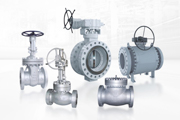
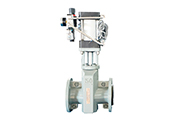
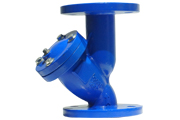
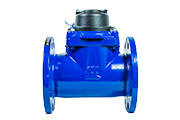
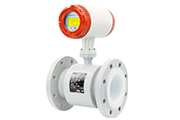
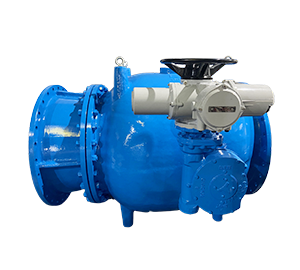
HVAC (Heating, Ventilation, and Air Conditioning) systems are the lungs and circulatory system of modern buildings. Whether it is a commercial high-rise, a hospital, a data center, or an industrial facility, the performance of the HVAC system depends entirely on proper flow control, isolation, strainer, and monitoring.
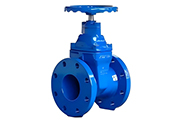
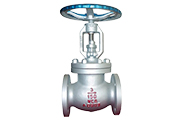
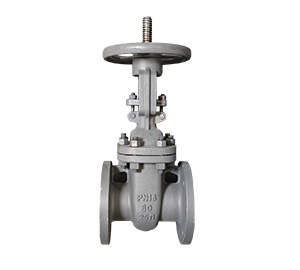
A gate valve with a brass body (sometimes dezincification-resistant brass for aggressive water). The gate moves linearly up and down to start or stop flow. Used primarily for isolation in HVAC piping, not for throttling.
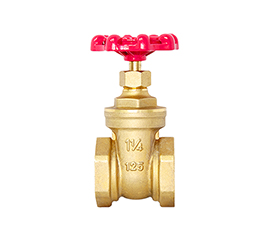
Low pressure drop when fully open – Gate fully retracts, offering unobstructed flow path.
Bi-directional sealing – Seals equally well in both flow directions.
Cost-effective for isolation – Lower cost than ball valves for same diameter.
Corrosion resistant – Brass resists scale and corrosion in closed-loop HVAC water.
* Isolation of chilled water pumps for maintenance
* Shut-off of heating coils in AHUs (Air Handling Units)
* Isolation of branch lines in hot water heating systems
* Pump suction and discharge isolation
For infrequent operation where a reliable, low-cost isolation valve is needed, the brass gate valve offers the lowest pressure drop when open. Ball valves have higher pressure drop in the same size; butterfly valves require more space for actuation. When the requirement is “fully open or fully closed” with minimal flow resistance, the gate valve remains the standard.
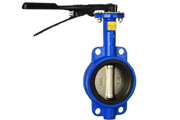
A butterfly valve with a wafer-style body (fits between two flanges). The disc rotates 90° to open or close. Designed to meet multiple standards (GB, DIN, ANSI, JIS) — making it interchangeable across projects. Typically with an EPDM rubber liner for tight shut-off.
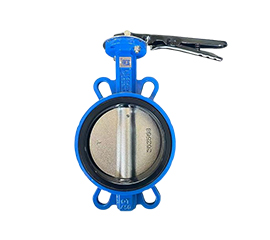
Compact and lightweight – Takes less space than gate or ball valves.
Multi-standard compatibility – Fits between GB, DIN, ANSI, and JIS flanges.
Quick quarter-turn operation – Fast open/close for automated systems.
Good throttling capability – Disc position can regulate flow.
Low cost per size – Economical for large diameters (DN50 to DN300+).
* Chilled water flow regulation in main risers
* Condenser water isolation and balancing
* AHU coil isolation
* Pump discharge shut-off (moderate pressure)
In HVAC systems, space is often limited in mechanical rooms. A gate valve requires long stem travel; a ball valve is heavy in large sizes. The wafer butterfly valve slides between flanges and offers a quarter-turn operation. For diameters above DN100, it is often the only practical choice for both isolation and basic throttling.
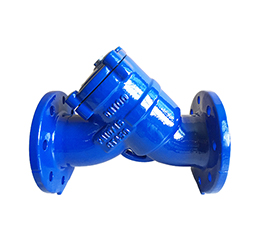
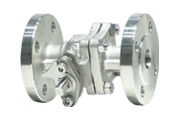
A strainer with a Y-shaped body containing a perforated stainless steel screen. Installed ahead of sensitive equipment (pumps, valves, flow meters) to remove dirt, rust, and debris from circulating water.
Protects downstream equipment – Prevents debris from damaging pump seals, valve seats, and flow meters.
Easy maintenance – Removable screen cap allows cleaning without removing the strainer body.
Low pressure drop – Y design offers better flow than basket strainers.
Magnetic insert option – For capturing ferrous particles in older systems.
Wide mesh selection – 20 mesh to 60 mesh for different HVAC needs.
* Upstream of chilled water pumps
* Ahead of automatic control valves (to prevent seat damage)
* Before plate heat exchangers (to prevent fouling)
* Inlet of electromagnetic flow meters
Without a strainer, debris circulating in an HVAC system will: erode pump impellers, lodge in control valve seats (causing leaks), and foul heat exchanger plates. No other device continuously removes solid particles from the flow stream without interrupting operation. A Y-type strainer is the first line of defense for every HVAC component.
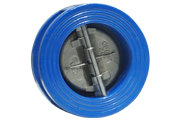
A check valve with a hinged disc that swings open with forward flow and closes when flow stops or reverses. Prevents backflow and water hammer in HVAC piping.
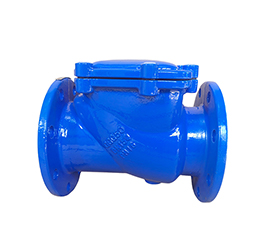
Low cracking pressure – Opens with minimal forward flow.
Full flow area when open – Disc swings completely out of the flow path.
Durable – No springs to fatigue; suitable for vertical or horizontal installation.
Quiet operation – With proper sizing, reduces water hammer compared to spring-loaded checks.
* Pump discharge lines (preventing reverse flow when pump stops)
* Parallel pump arrays (preventing backflow through idle pumps)
* Condenser water return lines
* Chiller outlet to prevent backflow into evaporator
When a centrifugal pump stops, water will flow backward through the pump — causing the impeller to spin backward and potentially damaging the pump or allowing dirty water to reverse. A spring-loaded check valve requires higher pressure to open. The swing check valve opens with almost no resistance and closes gently. For HVAC water systems, it remains the most reliable backflow prevention device.
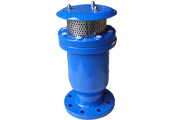
A valve installed at high points in HVAC piping to automatically release trapped air. When air accumulates, a float drops and opens an orifice. When water rises, the float closes the orifice.
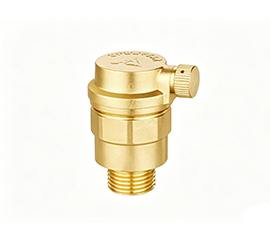
Prevents air binding – Ensures pumps and coils are fully flooded with water.
Reduces corrosion – Removes oxygen from closed loops.
Prevents noise – Eliminates gurgling sounds from air movement.
Automatic operation – No manual bleeding required.
* High points in chilled water piping
* Top of vertical risers
* Upstream of pumps (to prevent cavitation)
* Coil connections in AHUs
Air trapped in an HVAC system reduces heat transfer (air blocks water flow through coils), causes pump cavitation, and accelerates corrosion. Manual bleed valves are often forgotten. The automatic air release valve continuously removes air without human intervention. No other device provides this continuous de-aeration.
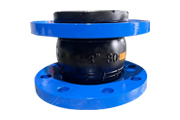
A flexible connector made of rubber (EPDM, neoprene, or natural rubber) with reinforcing fabric and steel flanges. Absorbs vibration, compensates for thermal expansion, and reduces noise transmission.
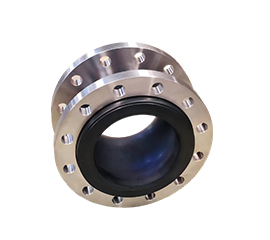
Vibration isolation – Absorbs pump and chiller vibration, protecting connected piping.
Thermal expansion compensation – Allows pipes to expand and contract without stress.
Noise reduction – Reduces structure-borne noise transmission.
Misalignment tolerance – Compensates for minor pipe misalignment.
Easy installation – Lightweight compared to metal expansion joints.
* Pump suction and discharge connections (isolating vibration)
* Chiller and boiler connections
* Between pipe anchors (absorbing thermal movement)
* Where pipes pass through walls (preventing stress)
Rigid metal piping cannot absorb the vibration from large pumps or chillers. Without flexible joints, vibration transmits through pipes into the building structure — causing noise complaints and fatigue failures at pipe supports. Metal expansion joints are heavier and more expensive. The rubber joint provides the perfect balance of flexibility, vibration absorption, and cost.
A quarter-turn valve with a brass body and a chrome-plated brass ball. The ball has a bore (full port or standard port). When aligned with the pipe, flow passes; when turned 90°, flow stops. Excellent for frequent operation.
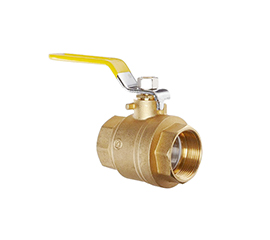
Quick quarter-turn – Open or closed in a 90° motion.
Tight shut-off – PTFE seats provide bubble-tight sealing.
Full port option – Same internal diameter as pipe, minimal pressure drop.
Visible position – Handle position shows whether valve is open or closed.
Durable for frequent use – Outlasts gate valves in cyclic service.
* Isolation of small branch lines (DN15 to DN50)
* Shut-off for pressure gauges and thermometers
* Drain valves at low points
* Make-up water line isolation
For sizes DN50 and below, the brass ball valve has largely replaced gate valves for two reasons: quarter-turn operation (no more turning a stem 15 times) and bubble-tight shut-off. A gate valve may weep past the seat; a ball valve with PTFE seats seals completely. For appliance connections (boilers, expansion tanks), the ball valve is the standard.
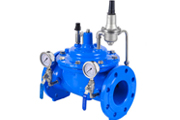
A brass valve with pressure test ports and a calibrated adjustment mechanism (usually a double regulating valve, DRV). Used to precisely set and measure flow rate in each branch of a hydronic system.
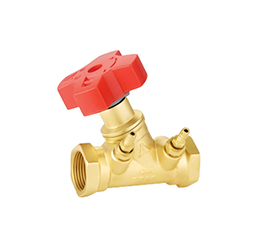
Precise flow measurement – Pressure ports allow measurement with a flow meter.
Adjustable pre-set – Can be locked to a designed flow rate.
Verifiable – Flow can be checked after system operation.
Good for variable flow systems – Maintains design balance.
Compact for mechanical rooms – Fits in tight spaces.
* Balancing chilled water flow to each floor or zone
* Ensuring design flow through air handling unit coils
* Radiator or fan coil unit balancing
* Primary-secondary pump loop balancing
Without balancing valves, the closest coils to the pump get too much flow, while far coils get too little. Manual gate or ball valves cannot measure flow — you have no idea if you set them correctly. A balance valve provides both adjustment and measurement in one body. For any hydronic system requiring guaranteed flow distribution, it is irreplaceable.
An electrically operated valve that opens or closes when a coil is energized. Used for remote on/off control of water flow in HVAC systems. Available in brass or stainless steel bodies.
Remote automatic control – Operated by thermostat, timer, or BMS.
Fast response – Opens or closes in under one second.
Low power consumption – Only draws power when changing state (latching type) or holding (standard).
Compact – Small footprint for panel mounting.
* Make-up water to cooling towers
* Drain valve automation
* Zone valve control in fan coil units
* Freeze protection drain-down systems
When the HVAC system needs to automatically turn water on or off based on temperature, time, or remote signal, a solenoid valve is the simplest solution. A motorized ball valve requires more space and cost; a manual valve requires human presence. The solenoid valve provides instant, remote, automatic control that no manual valve can match.
A mechanical instrument that measures fluid pressure in HVAC piping. Typically a Bourdon tube design with a glycerin-filled case to dampen vibration and protect the movement.
Real-time system pressure monitoring – Essential for pump and chiller operation.
Glycerin fill – Dampens pump pulsation and vibration, extending life.
Color-coded dial – Green zone for normal operating pressure.
Low cost per point – Economical to install at key locations.
* Pump discharge (to verify pump develops pressure)
* Pump suction (to confirm net positive suction head)
* Filter/strainer differential (across Y-strainer)
* Chiller and boiler inlet/outlet
You cannot operate an HVAC system blind. Without pressure gauges, you wouldn’t know if a pump is dead-headed, a strainer is clogged, or a chiller is low on water. Digital sensors cost more and require power. The simple mechanical pressure gauge provides instant, local, no-power-needed reading. For field technicians, it is the first diagnostic tool.
A mechanical temperature measuring instrument with a stem inserted into a thermowell in the pipe. Uses a bimetal coil that rotates a dial pointer. No power required.
Local temperature reading – No need to access BMS or handheld meter.
Durable and reliable – No batteries or electronics to fail.
Wide range available – 0°C to 120°C for HVAC water systems.
Low cost – Economical to install at multiple points.
* Chilled water supply and return lines (measuring ΔT)
* Heating hot water supply and return
* Condenser water inlet/outlet
* Boiler and chiller connections
HVAC efficiency depends on temperature difference (ΔT). Without accurate temperature measurement at supply and return, you cannot calculate system performance. BMS sensors may fail or drift. A bimetal thermometer provides an independent, local, visual verification of temperature. For balancing and troubleshooting, it is the technician’s essential tool.
A flow meter that measures flow rate using Faraday’s law of electromagnetic induction. Requires a conductive fluid (water with minerals). No moving parts — excellent for HVAC water applications.
No pressure drop – Full bore design with no obstruction.
No moving parts – No wear, no maintenance.
Highly accurate – ±0.5% of reading or better.
Bidirectional measurement – Measures forward and reverse flow.
Analog output (4-20mA) – Connects directly to BMS or controller.
* Chilled water flow measurement for energy metering
* Heating hot water billing (tenant sub-metering)
* Condenser water flow monitoring
* Pump performance verification
To measure water flow in HVAC accurately, you have three options: orifice plate (high pressure drop), ultrasonic (sensitive to pipe condition), or electromagnetic. The electromagnetic flow meter has no moving parts and no pressure drop, making it ideal for pump efficiency monitoring. For BMS-integrated energy monitoring, it is the standard choice because it provides a linear 4-20mA signal without regular calibration.
| Product | Primary Role in HVAC | Typical Application |
| Brass Gate Valve | Isolation (on/off) | Pump suction/discharge, coil isolation, branch shut-off |
| Multi-Standard Wafer Butterfly Valve | Isolation and basic throttling | Chilled water risers, condenser water, AHU coils |
| Y-Type Strainer | Debris removal | Upstream of pumps, control valves, heat exchangers, flow meters |
| Swing Check Valve | Backflow prevention | Pump discharge, parallel pump arrays |
| Air Valve | Automatic air release | High points in piping, top of risers, upstream of pumps |
| Rubber Joint | Vibration absorption, thermal expansion | Pump and chiller connections, pipe wall penetrations |
| Brass Ball Valve | Frequent on/off isolation | Branch lines (DN50 and below), drain valves, gauge shut-offs |
| Brass Balance Valve | Flow balancing and measurement | Floor/zone balancing, AHU coil balancing |
| Solenoid Valve | Automatic remote on/off | Cooling tower make-up, drain automation, zone control |
| Pressure Gauge | Local pressure monitoring | Pump discharge/suction, strainer differential |
| Thermometer | Local temperature monitoring | Chilled water supply/return, heating supply/return |
| Electromagnetic Flow Meter | Accurate flow measurement | Energy metering, tenant sub-metering, BMS integration |
Selecting the wrong component for an HVAC application can lead to inefficient operation, premature failures, and tenant complaints. WEIZIDOM Group has supplied HVAC components for over 25 years, with products that meet GB, ANSI, DIN, BS, and JIS standards.
Contact Eileen for a consultation or project-specific quote:
Website: www.wsdvalves.com
Instagram: @eileen_weizidom.solution
Tell us your system type (chilled water, hot water, condenser), pipe size, pressure, and control requirements — we will recommend the exact products for your HVAC project.