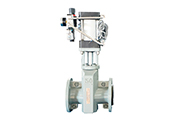
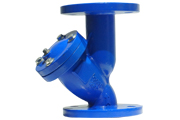
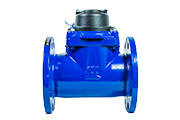
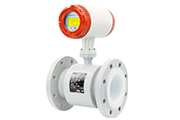
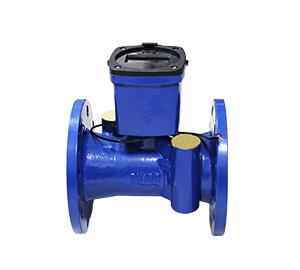
When you need a valve that combines fast quarter-turn operation, exceptional durability, and the ability to handle everything from crude oil to corrosive chemicals — the plug valve deserves your serious consideration. For over a century, plug valves have been the unsung workhorse of industrial piping, yet many engineers overlook them in favor of more common ball or butterfly valves.
So what makes the plug valve different? Imagine a tapered or cylindrical plug with a hole through its center. Rotate it 90 degrees, and the hole either aligns with your pipeline (full flow) or turns perpendicular (complete shut-off). That’s it. Simple. Reliable. Effective.
But here’s what most suppliers won’t tell you: plug valves offer unique advantages that ball valves simply cannot match — particularly when your media is prone to fouling, crystallizing, or when you need multi-port flow diversion in a single valve body.
In this comprehensive guide, we’ll walk you through everything you need to know about plug valves: how they work, where they excel, how to select the right materials for your application, and why WEIZIDOM’s API 599, API 6D, and GB12240 compliant plug valves might be the solution your pipeline has been waiting for.
A plug valve is a quarter-turn rotary valve that uses a cylindrical or tapered plug with a through-port (bore) to control fluid flow.
The plug rotates within the valve body to either:
Open position: Align the bore with the pipeline axis — fluid flows straight through with minimal pressure drop
Closed position: Rotate the plug 90 degrees so the solid face blocks the flow path — bubble-tight shut-off
This simple, robust design has been proven in demanding industrial service for over a century. Unlike gate valves that require multiple turns to open or close, the plug valve achieves full flow or full shut-off with just a quarter-turn (90°) of the handle or actuator.

| Characteristic | Description |
| Operation | Quarter-turn (90° rotation) |
| Flow path (open) | Straight-through, full bore |
| Pressure drop | Very low |
| Port configurations | 2-way, 3-way L-port, 3-way T-port, multi-port |
| Sealing options | PTFE sleeve (non-lubricated), lubricated (metal-to-metal), metal-seated (fire-safe) |
| Best for | Multi-port switching, fouling/crystallizing media, high-pressure, high-temperature |
At WEIZIDOM, our plug valves are manufactured to API 599, API 6D, and GB12240 standards with 12-step quality testing from raw material to finished product.
* The valve body contains a tapered or cylindrical plug with a machined port (bore) through its center
* The plug is positioned between seating surfaces (PTFE sleeve or metal seats)
* A stem connects the plug to an operator (handle, gear, or actuator)
Opens the valve (bore aligns with pipeline) — fluid flows straight through
Closes the valve (solid plug face blocks flow) — positive shut-off
For lubricated plug valves: A sealant (grease) is injected between the plug and body to reduce friction and provide sealing. The grease also acts as a barrier against corrosive media.
For non-lubricated (sleeved) plug valves: A PTFE sleeve lines the body cavity. The plug rotates within the PTFE sleeve, which provides low-friction operation and bubble-tight sealing without lubrication.
The self-cleaning advantage: When the plug rotates, the leading edge of the port wipes away deposits, debris, and crystallization from the body bore — preventing build-up and ensuring continued smooth operation. This is a feature ball valves do not have.
Plug valves are found across virtually every industrial sector.
Crude oil pipelines, refined product transfer, wellhead flow lines, manifold systems
High-pressure gas transmission, compressor station isolation
Chemical transfer lines, reactor feed, corrosive media isolation, sampling systems
Applications where media may foul, crystallize, or leave deposits
Sanitary process lines, CIP circuits, solvent transfer, API isolation
Clean, corrosion-resistant service with PTFE sleeves
Ammonia service, phosphoric acid lines, slurry handling, product transfer
Steam lines (WC6 body for high-temperature), boiler feed water, cooling water, fuel oil transfer
Process water, slurry bypass lines, reagent feed, concentrate transfer
Black/white liquor, stock lines, chemical feed
| Industry | Typical Media | Recommended Body Material | Recommended Seal |
| Oil & Gas | Crude oil, gas, water | WCB | Lubricated / PTFE sleeve |
| Chemical | Acids, caustics, solvents | CF8/CF8M (SS304/SS316) | PTFE sleeve |
| Power | High-temp steam | WC6 | Metal-seated |
| Pharmaceutical | Clean chemicals, water | CF8 (SS304) | PTFE sleeve |
| Fertilizer | Ammonia, acids | CF8M (SS316) | PTFE sleeve |

Why choose a plug valve instead of a ball valve or butterfly valve? Here are six compelling reasons:
| Advantage | Why It Matters |
| Self-Cleaning Wiping Action | When the plug rotates, its leading edge wipes away deposits and crystallized media from the body bore — prevents build-up and jamming. Ball valves lack this feature. |
| Multi-Port Capability | One plug valve can serve as a 3-way diverter or mixer — eliminates multiple valves and tee fittings. Ball valves have limited 3-way options; butterfly valves have none. |
| Compact, Straight-Through Flow | Full bore design creates minimal pressure drop — reduces pumping energy costs. |
| Bi-Directional Sealing | Seals equally well against pressure from either direction — simplifies installation. |
| Wide Material Selection | WCB, WC6, CF8, CF8M — one valve family handles oil/water/steam, high-temperature steam, and corrosive chemicals. |
| Proven Reliability | Over 100 years of service in demanding applications — time-tested design. |
The bottom line: If your application involves frequent operation, multi-port switching, media that tends to foul or crystallize, or high-pressure/high-temperature service — a plug valve may be your best choice.
Plug valves are exceptionally versatile because they can be configured with different port arrangements.
| Feature | Description |
| Ports | 2 ports (inlet + outlet) |
| Function | Standard on/off isolation |
| Best for | General isolation in oil, water, steam, chemical lines |
How it works: One inlet, one outlet. Plug bore aligns with pipe = open. Plug rotated 90° = closed.
| Feature | Description |
| Ports | 3 ports (common + 2 outlets) |
| Function | Common inlet diverts to EITHER outlet A OR outlet B (one outlet always closed) |
| Best for | Flow switching between two destinations (filter switching, tank filling, bypass lines) |
How it works: The L-shaped port connects the common inlet to one outlet at a time. Rotate the plug 90° to switch to the other outlet.
| Feature | Description |
| Ports | 3 ports (common + 2) |
| Function | Common port can flow to BOTH outlets simultaneously; OR combine flow from two inlets to common outlet |
| Best for | Reagent mixing, flow combining, distribution to multiple points |
How it works: The T-shaped port can connect the common port to both outlet ports at the same time — enabling mixing or simultaneous distribution.
| Need | Recommended Configuration |
| Simple on/off isolation | 2-way (straight-through) |
| Switch flow between two destinations (A or B) | 3-way L-port (diverter) |
| Combine two flows into one OR distribute one flow to both outlets | 3-way T-port (mixing/distributing) |

Selecting the right body material is critical for valve performance and service life. Here’s how to choose:
| Body Material | Equivalent | Best For | Temperature Range | Key Characteristics |
| WCB | Carbon steel | General oil, water, steam, gas — non-corrosive | -29°C to +425°C | Cost-effective, good strength, most common |
| WC6 | Chrome-moly steel | High-temperature steam, power plant, refinery | -29°C to +540°C | 1.25% Chrome-0.5% Molybdenum — excellent high-temperature strength |
| CF8 | SS304 | General corrosive service, oxidizing acids, pharmaceutical | -196°C to +650°C | 18Cr-8Ni stainless steel — good general corrosion resistance |
| CF8M | SS316 | Aggressive corrosive service, chlorides, reducing acids | -196°C to +650°C | 18Cr-10Ni-2Mo — molybdenum improves chloride/pitting resistance |
| If your media is… | Choose… |
| Non-corrosive (oil, water, steam, gas) | WCB |
| High-temperature steam (>425°C) | WC6 |
| Mildly corrosive (dilute acids, food, pharmaceutical) | CF8 (SS304) |
| Aggressively corrosive (strong acids, chlorides, salt water) | CF8M (SS316) |
The seal (or sleeve) determines the valve’s temperature range, chemical compatibility, and shut-off performance.
| Seal Type | Best For | Temperature Range | Shut-Off | Maintenance |
| PTFE Sleeve (Non-Lubricated) | Clean media, corrosive chemicals, pharmaceutical | -200°C to +200°C | Bubble-tight | None — no lubrication required |
| Lubricated (Metal-to-Metal) | High temperature, abrasive media, steam | -29°C to +540°C | Bubble-tight | Periodic grease injection |
| Metal-Seated (Fire-Safe) | High temperature, fire-safe applications | -29°C to +650°C+ | Moderate (metal-to-metal) | None — secondary seal for fire safety |
| If your application is… | Choose… |
| Clean chemicals, water, oil, pharmaceutical | PTFE sleeve (non-lubricated) — maintenance-free |
| High-temperature steam, abrasive media, frequent cycling | Lubricated (metal-to-metal) — durable, self-cleaning |
| Fire-safe required for flammable hydrocarbons | Metal-seated — secondary seal for fire events |
| Parameter | WEIZIDOM Plug Valve Specifications |
| Design Standards | API 599, API 6D, GB12240 |
| Diameter Range | DN50 – DN350 (2″ – 14″) |
| Pressure Range | Class 150 – Class 1500 (PN16 – PN160) |
| Temperature Range | -196°C to +650°C+ (depending on material) |
| Body Materials | WCB, WC6, CF8 (SS304), CF8M (SS316) |
| Seal / Sleeve Types | PTFE sleeve, Lubricated, Metal-seated |
| Port Configurations | 2-way, 3-way L-port, 3-way T-port |
| End Connections | Flanged (ASME/PN/GB), Butt Weld, Socket Weld, Threaded |
| Testing Standards | API 598 / ISO 5208 |
| Optional Features | Fire-Safe (API 607), Low Fugitive Emission (ISO 15848), NACE Compliance |
Proper installation ensures long service life and reliable operation.
| Installation Guideline | Why It Matters |
| Verify correct port configuration and orientation before installation | 3-way valves have specific port functions — incorrect piping prevents proper operation |
| For lubricated plug valves, ensure lubrication fittings are accessible | Routine in-service lubrication required for sealing and smooth operation |
| For PTFE-sleeved valves, do not exceed temperature rating (200°C) | PTFE sleeve degrades above 200°C — use lubricated or metal-seated for high-temperature service |
| Install with isolation valves upstream and downstream (recommended) | Allows valve removal for maintenance without draining entire pipeline |
| For manual lever operation, ensure adequate clearance for lever travel | Lever must rotate 90° (or 180° for some 3-way configurations) between positions |
| For high-temperature steam service (WC6), allow warm-up time before operation | Thermal expansion of plug and body must reach equilibrium — prevents binding |
| For media that can crystallize or polymerize, cycle valve periodically | Prevents plug from becoming stuck due to deposit build-up |
Many engineers default to ball valves. But for certain applications, a plug valve is the superior choice.
| Consideration | Plug Valve | Ball Valve |
| Flow path (open) | Straight-through, full bore | Straight-through, full bore |
| Pressure drop | Very low | Very low |
| Multi-port capability | Excellent (2,3,4 port) | Limited (3-way available but uncommon) |
| Self-cleaning action | Yes — wiping action clears deposits | Limited — no wiping action |
| High-temperature capability | Excellent (metal-seated) | Excellent (metal-seated) |
| Fouling/crystallizing media | Excellent — wiping action prevents jamming | Poor — media can harden in ball cavity |
| Cost (2-way) | Moderate | Moderate |
| Best for | Multi-port switching, fouling media, high-pressure | General isolation, fast operation, high-cycle |
Decision guide:
Choose plug valve when: You need 3-way flow diversion, media tends to foul/crystallize, or you need a self-cleaning valve for dirty service
Choose ball valve when: You need simple 2-way isolation, high cycle life, or lower initial cost for clean media

When you source plug valves from WEIZIDOM, you get more than just a product — you get a complete solution backed by decades of manufacturing expertise.
| Reason | Benefit |
| API 599, API 6D & GB12240 Compliant | Manufactured to recognized international and Chinese standards — ensures quality, dimensional accuracy, and performance for oil, gas, chemical, power, and pharmaceutical pipelines |
| Exceptional Diameter & Pressure Range (DN50–DN350, Class 150–1500) | One supplier for medium to large process lines and high-pressure applications |
| Broad Material Selection | WCB, WC6, CF8, CF8M — select optimal material for oil/water/steam, high-temperature steam, or corrosive chemical service |
| Quarter-Turn Fast Operation | 90° rotation provides rapid isolation — ideal for emergency shutdown and high-cycle applications |
| 108+ Export Destinations | Proven reliability worldwide — Mexico, Colombia, Chile, Pakistan, Saudi Arabia, UAE, South Africa, Egypt, and more |
| 12-Step Quality Testing | From raw material to finished product — material verification (PMI), dimensional inspection, hydrostatic testing, seat leakage testing |
| Free Technical Support | Our engineers help you select the right valve for your specific application |