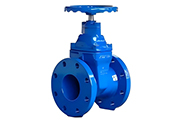
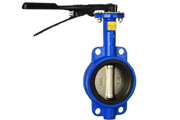
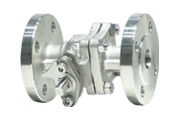
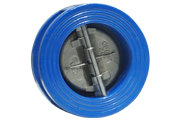
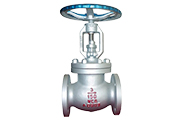
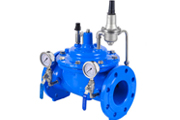
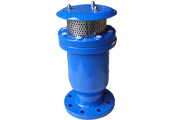
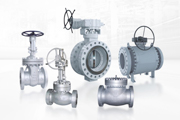
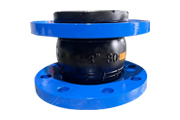
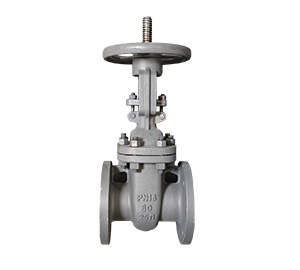
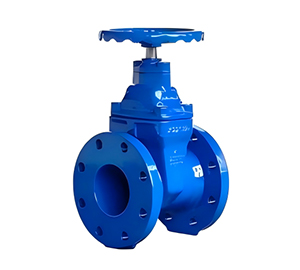
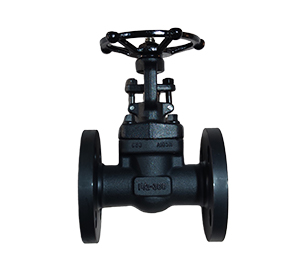
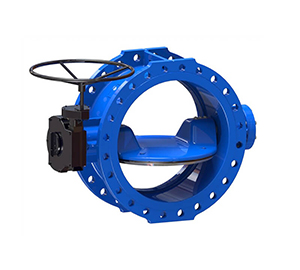
A gate valve is a commonly used shut-off valve that controls the flow and shut-off of media through the lifting and lowering of the gate. Gate valves have the advantages of low flow resistance, good sealing performance, and wide application range. They are widely used in various pipeline systems in industries such as petroleum, chemical, power, and water treatment, mainly used to connect or cut off the medium in the pipeline.
Please read and understand this manual thoroughly before installing, operating, or maintaining the valve.
🔹 Pressure Hazard: Ensure the pipeline system is fully depressurized and the valve is in the closed position before performing any work.
🔹 High Temperature Hazard: When the valve operates under high temperature conditions, the surface temperature may be very high. Do not touch directly to avoid burns.
🔹 Media Hazard: Be aware of the fluid properties (e.g., toxic, corrosive, flammable) and take appropriate safety precautions.
🔹 Installation Environment: The valve should be installed in a location that allows for easy operation and maintenance.
🔹 Regular Inspection: Inspect the valve periodically to ensure it is in good working condition.

Straight-through media channel, low flow resistance, low energy consumption, suitable for working conditions requiring low flow resistance.
Metal seal or soft seal with good sealing performance and long service life.
Suitable for various media such as water, steam, oil, acid, alkali, etc., with a wide range of applications.
Media can flow bidirectionally, installation direction is not limited.
Relatively short face-to-face dimensions, saving installation space.
Gate and seat made of wear-resistant materials, suitable for media containing particles.
The gate valve mainly consists of valve body, bonnet, gate, stem, stuffing box and driving device. Its working principle is that the driving device (handwheel, gearbox or actuator) drives the stem to move linearly, making the gate move up and down in the valve body to realize the opening and closing of the valve. When the gate is fully raised, the valve is fully open and the medium can pass freely; when the gate is fully lowered, the valve is fully closed and the medium is cut off.
🔹 Verify the Valve: Confirm that the valve model, pressure class, material, and end connections meet your application requirements.
🔹 Visual Inspection: Check the valve for any damage incurred during shipment. Inspect the valve body for cracks or casting defects.
🔹 Cleanliness: Remove all foreign materials and dirt from the valve cavity and connection parts.
🔹 Function Test: Manually operate the valve several times to ensure the gate and stem move flexibly without sticking.
🔹 Seal Check: Check if the sealing surface is intact and undamaged.

📌 Select Installation Location
The gate valve should be installed on a horizontal pipeline with the stem vertically upward. Ensure there is sufficient space for operation and maintenance on both sides of the valve. For large diameter gate valves, consider setting up supports.
📌 Prepare Installation Interface
Ensure the pipeline connection interface matches the valve (such as flange specification, bolt hole spacing). Clean the pipeline interface to remove rust, welding slag and other debris. Check if the flange sealing surface is flat.
📌 Install the Valve
Place the valve between the two pipeline flanges, note that there is no special requirement for medium flow direction (bidirectional sealing). Insert the bolts in sequence and tighten all nuts evenly in a crisscross pattern to ensure uniform gasket compression.
📌 Post-Installation Check
After installation, check if the valve is secure and if all connections are well sealed. Operate the valve several times to ensure flexible opening and closing. Check if the valve is coaxial with the pipeline when fully open.
🔹 Opening the Valve: Rotate the handwheel counter-clockwise until the gate is fully raised to the open position. For rising stem gate valves, the opening can be judged from the stem position.
🔹 Closing the Valve: Rotate the handwheel clockwise until the gate is fully lowered to the closed position. Do not use excessive force when closing to avoid damaging the sealing surface.
🔹 Flow Regulation: Gate valves are generally not used for flow regulation, partial opening will erode the sealing surface and shorten the valve service life.
🔹 Operating Tools: Operate the valve only with the supplied handwheel or a properly selected gearbox/actuator.
🔹 Precautions: Operate smoothly and slowly to avoid impact. Valves that are not operated for a long time should be regularly activated to prevent sticking.
🔹 Regular Inspection: Check the valve’s working condition at least once a month to ensure flexible operation.
🔹 Cleaning Maintenance: Regularly remove dirt from the valve surface and possible accumulated impurities inside.
🔹 Lubrication: Lubricate the stem threads and driving device periodically with the specified grease as recommended by the manufacturer.
🔹 Packing Adjustment: If slight leakage is found at the stem, evenly tighten the packing gland bolts appropriately.
🔹 Seal Check: Regularly check the sealing surfaces of the gate and seat, repair or replace if worn or damaged.
🔹 Long-Term Shutdown: If the system is shut down for a long time, keep the valve slightly open, and clean and rust-proof the valve.
| Symptom | Possible Cause | Solution |
| Valve leakage | 1. Debris on sealing surface 2. Worn or damaged sealing surface 3. Gate not fully closed |
1. Cycle valve several times to flush debris 2. Repair or replace seal 3. Check and ensure gate is fully closed |
| High operating torque | 1. Over-tightened packing 2. Lack of lubrication on stem threads 3. Internal deposits or scaling |
1. Adjust the packing gland evenly 2. Apply lubricant 3. Disassemble and clean the valve |
| Stem leakage | 1. Worn or loose packing 2. Scratched stem |
1. Evenly tighten packing gland or replace packing 2. Repair or replace stem |
| Gate stuck | 1. Large particle impurities in medium 2. Foreign objects in valve body 3. Gate deformation |
1. Check and clean filter device 2. Remove foreign objects from valve body 3. Replace gate |
| Handwheel hard to turn | 1. Bent stem 2. Damaged threads 3. Lack of lubrication |
1. Straighten or replace stem 2. Repair or replace threads 3. Apply lubricant |

| Item | Parameter |
| Nominal diameter | DN50 ~ DN1000 |
| Nominal pressure | PN10 ~ PN100 |
| Connection type | Flange, Butt weld, Socket weld |
| Body material | Cast iron, Ductile iron, Carbon steel, Stainless steel, Alloy steel |
| Gate material | Stainless steel, Chrome steel, Duplex steel |
| Stem material | Stainless steel, Alloy steel |
| Seal material | Stainless steel, Hard alloy, PTFE |
| Applicable temperature | -29°C ~ 550°C (depending on body material) |
| Applicable media | Water, steam, oil, acid, alkali, gas, etc. |
| Actuation method | Handwheel, Gear operator, Electric, Pneumatic |
This manual provides general guidance. Due to the vast differences in specific working conditions, the user must exercise judgment and operate accordingly. The manufacturer is not responsible for any direct or indirect losses caused by failure to comply with the warnings and procedures in this manual, or due to improper installation, operation, or maintenance.