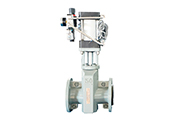
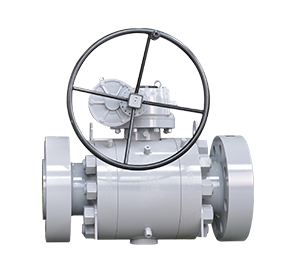
Is leakage in your high-pressure slurry line costing you downtime, maintenance, and lost production? Standard knife gate valves often struggle to deliver zero leakage at elevated pressures. This guide reveals how 2-piece knife gate valves—with their bolted split-body design and reinforced sealing system—achieve higher pressure ratings (up to 20 bar) and bidirectional bubble-tight shutoff.
Knife gate valves have long been the workhorse of slurry and abrasive media isolation in mining, wastewater treatment, and industrial processing. Their sharp, beveled gate cuts through fibrous materials and solids that would jam conventional gate or ball valves . However, traditional knife gate valve designs have a well-known limitation: pressure capability. Most standard models are rated for low-pressure service (typically PN10 or PN16), and achieving true zero-leakage in high-pressure slurry conditions has been a persistent challenge .
The 2-piece knife gate valve changes this equation. By combining a robust split-body design with advanced sealing technology, these valves deliver higher pressure ratings and bidirectional zero-leakage performance—making them the preferred choice for demanding applications where standard knife gates fall short .
This guide explains what makes 2-piece knife gate valves different, how they achieve superior pressure and sealing performance, and why they are essential for high-pressure slurry, mining, and industrial applications.

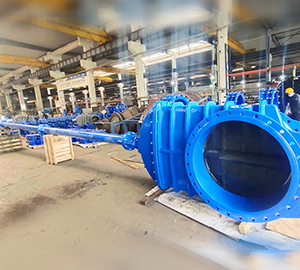
A 2-piece knife gate valve (also called a two-piece bolted body knife gate valve) is a knife gate valve constructed from two separate body halves that are bolted together around the gate and sealing assembly . This is in contrast to a one-piece body (monoblock) design, where the entire valve body is cast or machined as a single unit .
| Component | Function |
| Left and right body halves | Bolted together to form the complete valve body; contain the flow passage and sealing cavity |
| Gate (knife blade) | Sharp, beveled blade that slides vertically to cut through media and stop flow |
| Sealing system | Elastomeric or reinforced seats that compress against the gate to achieve zero leakage |
| Packing/gland | Seals around the gate stem to prevent external leakage |
| Bolting | High-strength bolts that clamp the two body halves together, compressing the sealing elements |
The operating principle is identical to other knife gate valves: a sharp gate moves vertically through the flow path, cutting through solids and seating against the valve seats to stop flow . The difference lies in how the sealing system is contained and energized.
In a 2-piece design, the two body halves clamp the sealing elements (seats and packing) in place. This clamping action provides compression and retention of the seals, enabling higher pressure containment and more reliable sealing than designs where seals are simply inserted into a one-piece body cavity .
The 2-piece bolted body design offers several structural advantages that enable higher pressure capability:
When the two body halves are bolted together, they compress the seat elements against the gate with controlled, uniform force. This mechanical compression energizes the seals, ensuring a tight seal even at elevated pressures . In a 2-piece design, the bolting force directly contributes to sealing performance—something a one-piece design cannot achieve in the same way.
The bolted connection between the two body halves distributes pressure loads across the entire joint. High-strength bolts maintain the clamping force even as internal pressure rises, preventing body separation or seal extrusion . This design allows pressure ratings up to 232 psi (16 bar) and in some HP versions up to 290 psi (20 bar) .
Modern 2-piece knife gate valves often feature steel-reinforced elastomer seats (also called “perimeter seats” or “sleeve seats”) . These seats are molded with embedded steel reinforcement rings that prevent deformation and extrusion under pressure. The reinforcement ensures the seat maintains its shape and sealing contact even under high differential pressures .
A critical feature of high-performance 2-piece knife gate valves is the absence of seat cavities. In designs with cavities, solids can accumulate and prevent the gate from seating fully, causing leakage . The 2-piece bolted design allows the seat to be configured as a full-perimeter sleeve with no dead zones, ensuring the gate always contacts a clean, unobstructed sealing surface .
Many 2-piece knife gate valves incorporate dual sealing zones: a primary elastomeric seat for bubble-tight shutoff, plus a secondary packing/gland seal for external leakage prevention . This redundancy provides an additional barrier against leakage, particularly valuable in high-pressure service.

Zero leakage in a knife gate valve requires that the gate seals completely against the seat when closed—with no bypass path for media. The 2-piece design achieves this through several mechanisms:
Unlike unidirectional knife gate valves that seal only against flow from one direction, 2-piece designs with full-perimeter seats provide bidirectional sealing . The elastomeric seat surrounds the gate opening completely, so when the gate closes, it presses against the seat on both upstream and downstream sides, creating a seal regardless of pressure direction.
The bolted body halves compress the seat elements against the gate with sufficient force to create an initial seal even at low pressure. As line pressure increases, the pressure acts on the seat, further energizing the seal against the gate—a self-energizing effect that improves sealing at higher pressures .
The steel reinforcement embedded in the seat prevents the elastomer from being extruded or pushed out of the sealing gap under high pressure. Without reinforcement, elastomeric seats can deform and lose contact with the gate at elevated pressures .
In the fully open position, reinforced seat designs can block all metal components from contacting the flowing media . This protects both the metal body and the seat from abrasive wear, extending service life and maintaining sealing integrity.
A robust packing gland system seals around the gate stem, preventing media from escaping to the atmosphere. The 2-piece design allows the packing to be compressed and adjusted independently of the body joint, ensuring reliable external sealing .
| Advantage | Description |
| Higher Pressure Ratings | Bolted body design enables pressure ratings up to 16-20 bar (232-290 psi), far exceeding standard knife gate limits |
| Bidirectional Zero Leakage | Full-perimeter reinforced seats provide bubble-tight shutoff in both directions |
| No Seat Cavities | Eliminates solids accumulation; ensures the gate always seats fully |
| Easy Maintenance | Split body allows seat replacement without removing the valve from the line |
| Reinforced Seats | Steel-reinforced elastomer seats resist extrusion and deformation under pressure |
| Full Bore Flow | Unrestricted flow path minimizes pressure drop and allows passage of large solids |
| Self-Cleaning Action | The knife edge cuts through solids; no cavities for material buildup |
| Multiple Material Options | Available in ductile iron, carbon steel (WCB), stainless steel (CF8/CF8M/CF3M), and duplex alloys |
2-piece knife gate valves are widely used in mining for slurry isolation, tailings lines, and concentrate transfer . Their ability to handle high-pressure slurries with abrasive solids makes them ideal for:
—— Ore slurry lines
—— Tailings disposal
—— Cyclone feed
—— Thickener underflow
—— Flotation circuits
In coal-fired power plants, these valves handle fly ash, bottom ash, and FGD slurry—media that are both abrasive and often under pressure .
For corrosive slurries and chemical processes, 2-piece knife gate valves with stainless steel or alloy bodies provide the required corrosion resistance and sealing integrity.
In municipal and industrial wastewater treatment, these valves manage primary sludge, secondary sludge, grit, and scum lines where reliable shutoff is essential .
The 2-piece design handles wood pulp, paper stock, and black liquor—fibrous, viscous media that require the knife gate’s cutting action .
| Component | Standard Options | High-Performance Options |
| Body | Ductile Iron, WCB Carbon Steel | CF8 (SS304), CF8M (SS316), CF3M (SS316L), Duplex (SAF 2507) |
| Gate | 304 Stainless Steel | 316, 317, 17-4PH, Duplex, Hastelloy C, Monel |
| Seat | EPDM, Buna-N | Viton (FKM), PTFE, Natural Rubber, Urethane |
| Packing | PTFE-impregnated synthetic fiber | PTFE with EPDM Quad Seal, PTFE with Viton Quad Seal |

Proper installation is critical for achieving rated pressure and zero-leakage performance:
| Step | Guideline | Reason |
| 1. Verify Specifications | Confirm pressure rating, media compatibility, and temperature range match system requirements | Prevents overpressure operation and premature failure |
| 2. Clean Pipeline | Remove welding slag, debris, and scale from pipeline before installation | Prevents seat damage and gate obstruction |
| 3. Check Flow Direction | Align the flow arrow on the valve body with actual flow direction | Ensures proper sealing and gate operation |
| 4. Symmetrical Bolting | Tighten flange bolts in a cross-pattern sequence using a torque wrench | Prevents flange distortion and ensures uniform gasket compression |
| 5. Verify Gate Alignment | Open and close the valve to confirm smooth gate travel and proper seating | Detects misalignment before commissioning |
| 6. Pressure Test | Hold at 1.1× design pressure for 10 minutes; verify no leakage | Confirms sealing integrity before service |
The 2-piece knife gate valve represents a significant advancement over conventional knife gate designs, delivering higher pressure capability and bidirectional zero-leakage performance through its bolted split-body construction and reinforced sealing system. By combining the knife gate’s inherent advantages—cutting through solids, no cavities, full bore flow—with the structural integrity and sealing reliability of a bolted body, these valves are the solution for demanding high-pressure slurry and industrial applications.
Whether you are handling abrasive mining slurries, corrosive chemical media, or high-pressure wastewater, a 2-piece knife gate valve provides the pressure containment and sealing performance required for reliable, long-term operation.
Contact WEIZIDOM for expert assistance in selecting the right 2-piece knife gate valve for your high-pressure application—including material selection, pressure rating verification, and custom specifications.