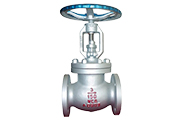
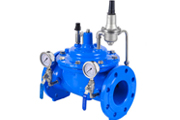
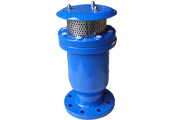
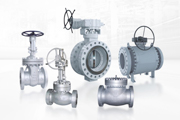
In modern water supply and industrial systems, accurate and reliable flow measurement is essential for efficiency, safety, and cost control.
Traditional mechanical flow meters often struggle with pressure loss, clogging, or limited accuracy—especially in systems handling corrosive fluids, wastewater, or large pipelines.
That’s where the electromagnetic flowmeter (magnetic flow meter) comes in — offering non-contact measurement, high precision, and no moving parts, making it ideal for long-term use.
At WEIZIDOM, we specialize in providing high-performance electromagnetic flowmeters for water treatment, HVAC, irrigation, and industrial applications.
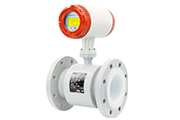
An electromagnetic flowmeter (often called a magnetic flow meter) is an instrument used to measure the flow rate of conductive fluids, such as water, wastewater, slurry, and chemical solutions.
It operates based on Faraday’s Law of Electromagnetic Induction — when a conductive fluid flows through a magnetic field, a voltage is generated proportional to the flow velocity.
✔Sensor (Measuring Tube) — Installed on the pipeline to detect voltage signals.
✔Electrodes — Detect the induced voltage.
✔Magnetic Coils — Create the magnetic field.
✔Transmitter — Converts signals into readable flow data.

The principle is simple but powerful:
The voltage generated by fluid flow is directly proportional to the flow velocity.
By measuring this voltage, the flowmeter accurately determines the flow rate.
Key features:
✅ No moving parts → less wear and lower maintenance.
✅ High accuracy even with low flow rates.
✅ Suitable for a wide range of fluid types.
Avoid areas with rapid temperature changes or high radiation.
Prefer indoor installation; if outdoors, use protective enclosures to prevent rain, sunlight, and corrosion.
Keep away from strong vibrations and magnetic fields.
Ensure adequate space for installation and maintenance.
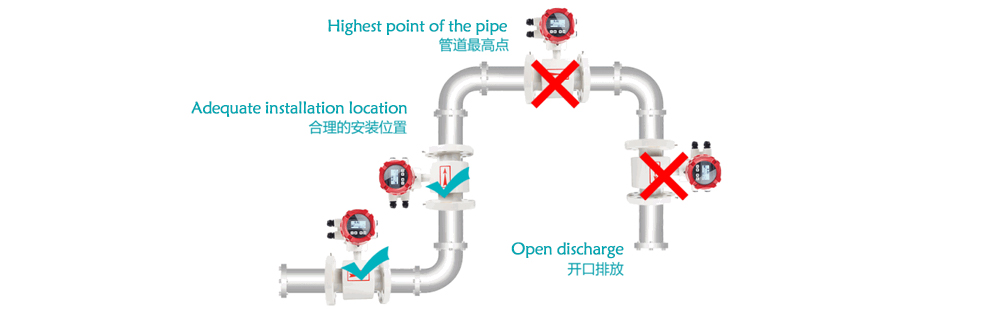
Install on horizontal or upward vertical pipelines.
Avoid the highest or downward sections where air bubbles can accumulate.
If pressure drop exceeds 5 meters, install an exhaust valve downstream.
Always install after the pump outlet, not at the pump inlet.
Upstream: ≥10×DN
Downstream: ≥5×DN
This ensures a stable flow profile for accurate measurement.
Ensure proper grounding (<10Ω resistance).
Use well-connected metal pipes or grounding rings to prevent electrical interference.
WEIZIDOM electromagnetic flowmeters are widely used in:
💧 Water Supply Systems – Urban pipelines, irrigation, and wastewater.
🏭 Industrial Processing – Chemical, food, and paper industries.
🌡️ HVAC Systems – Heating, cooling, and chilled water circulation.
⚡ Power Plants & Oil & Gas – Condensate, boiler feed water, and process fluids.
✔ High Accuracy: Up to ±0.5% of reading.
✔ Wide Range: Suitable for pipes from DN10 to DN3000.
✔ No Pressure Loss: Full-bore design ensures stable flow.
✔ Corrosion Resistance: Various linings (PTFE, rubber) for different media.
✔ Low Maintenance: No mechanical wear parts.
✔ Smart Output: Supports 4-20mA, pulse, and Modbus communication.
To ensure long-term accuracy:
✔Inspect electrodes regularly for buildup.
✔Check grounding to avoid electrical noise.
✔Avoid high voltage equipment nearby.
✔Recalibrate periodically if operating in harsh conditions.
When properly installed, electromagnetic flowmeters can last 10+ years with minimal maintenance.
🌍 100+ export markets and 1000+ project references worldwide
🏭 5+ specialized factories in China producing valves, fittings, and flow meters
🧠 Expert technical support from design to installation
💰 Competitive factory pricing and OEM customization
WEIZIDOM provides one-stop solutions for flow control systems — from valves and meters to complete water system solutions.

Q1: What fluids can be measured by an electromagnetic flowmeter?
A: Any conductive fluid, such as water, slurry, wastewater, acids, and alkalis.
Q2: How do I choose between insertion and full-bore types?
A: Use full-bore flowmeters for smaller diameters and high accuracy; insertion types are ideal for large pipelines and retrofitting.
Q3: Can electromagnetic flowmeters measure non-conductive fluids?
A: No. They require minimum conductivity (≥5 μS/cm).
The electromagnetic flowmeter plays a crucial role in ensuring accuracy, stability, and efficiency in modern pipeline systems.
By choosing WEIZIDOM, you get:
✔ Reliable flow measurement solutions
✔ Global experience
✔ Factory-direct support
📧 Contact us today: eileen@wsdsolution.com
🌐 Visit: www.wsdsolution.com