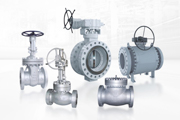
Water systems are complex networks that require a variety of components to function efficiently. From ensuring proper flow control to safeguarding against backflow and maintaining optimal pressure, each product plays a crucial role. In this article, we will explore the functions of key products including gate valves, butterfly valves, check valves, exhaust valves, filters, pressure – reducing valves, gaskets, pipe fittings, and flow meters within water systems.
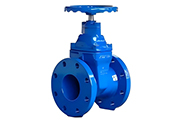
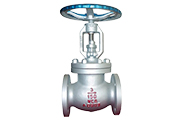
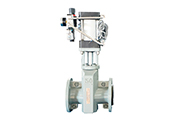
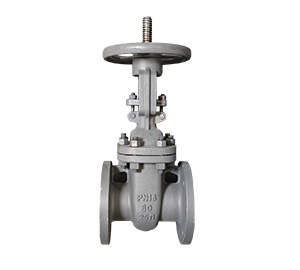
Gate valves are primarily used for fully opening or closing the flow of water in a pipeline. In a water system, when maintenance is required on a particular section of the pipeline, a gate valve can be shut off to isolate that part of the system. For example, during repairs of a water treatment plant’s internal pipes, gate valves can stop the water flow to the affected area, allowing technicians to work safely and efficiently. They offer low – flow resistance when fully open, which is beneficial for large – scale water transportation where minimizing energy losses due to friction is crucial.
They are commonly used in main water supply lines, both at the municipal level and in large industrial water systems. In a municipal water supply network, gate valves are installed at key junctions to control the distribution of water to different neighborhoods or industrial zones.

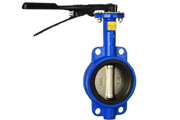
Butterfly valves are designed to regulate the flow of water. They operate by rotating a disc (the “butterfly”) perpendicular or parallel to the flow direction. In a water system, they can be used to adjust the volume of water flowing through a pipeline. For instance, in an irrigation system, butterfly valves can be adjusted to control the amount of water reaching different fields, depending on the crop’s water requirements. They are also useful for throttling applications where a more precise control of flow rate is needed compared to a simple on – off operation.
Butterfly valves are often found in HVAC (Heating, Ventilation, and Air – Conditioning) water – based systems, as well as in water treatment plants for controlling the flow of water during different treatment processes.

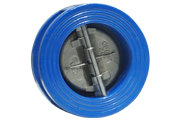
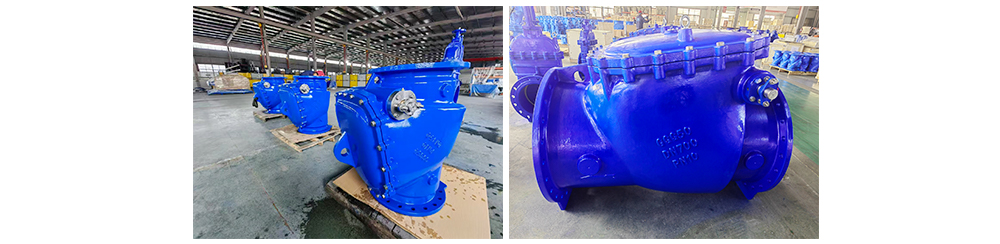
Check valves prevent the backflow of water in a pipeline. In a water system, this is essential to protect pumps, treatment equipment, and other components from damage caused by reverse flow. For example, in a water pumping station, if the pump fails, the check valve will prevent the water from flowing back into the pump, which could cause damage to the impeller and other internal components. They ensure that water flows in only one direction, maintaining the integrity of the water system’s flow regime.
Check valves are installed in areas where backflow is a potential risk, such as at the outlet of pumps, in water supply lines that connect to multiple sources, and in the return lines of water – based heating systems.
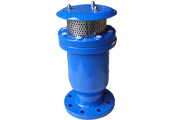
Exhaust valves, also known as air release valves, are crucial for removing air from the water system. Air can accumulate in pipelines over time, especially during the filling process or due to temperature changes. If not removed, this air can cause blockages, reduce the efficiency of pumps, and even lead to water hammer effects. Exhaust valves automatically release air when the pressure of air in the pipeline reaches a certain level, ensuring smooth water flow.
They are commonly installed at high points in the pipeline network, such as on the top of hills in a water distribution system or at the highest points of a multi – story building’s water supply pipes.
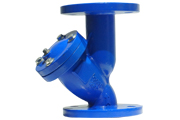
Filters in water systems are designed to remove impurities from the water. These impurities can range from sediment, sand, and rust particles to larger debris. By filtering the water, they protect downstream components such as valves, pumps, and water – using equipment from damage caused by abrasion. For example, in a water – cooled industrial machine, a filter installed in the water supply line will prevent small particles from entering the machine’s cooling system, ensuring its long – term operation.
Filters are used in various parts of the water system, including at the intake of water treatment plants, in the pre – treatment stages of industrial water systems, and in the final filtration before water is supplied to end – users in residential or commercial buildings.
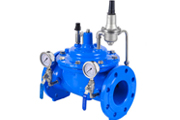
Pressure – reducing valves are used to lower the pressure of water in a pipeline to a desired level. In a water system, incoming water may have a high pressure, especially in municipal supply lines. This high pressure can damage sensitive equipment, such as faucets, showerheads, and some industrial water – using machinery. Pressure – reducing valves regulate the pressure, ensuring a stable and safe pressure for the end – user.
They are installed in residential and commercial buildings near the water meter to reduce the incoming water pressure to a suitable level for indoor plumbing systems. In industrial settings, they are used in areas where specific pressure requirements are needed for different processes.

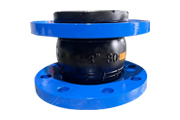
Gaskets provide a seal between two mating surfaces in a water system. They prevent leakage of water at joints, such as between pipes, valves, and flanges. A proper seal is essential to maintain the integrity of the water system, prevent water loss, and avoid damage to surrounding areas due to water seepage. For example, a gasket between a valve body and its cover ensures that water does not leak out during operation.
Gaskets are used in all types of connections within the water system, including flange connections, threaded connections, and between valve components.
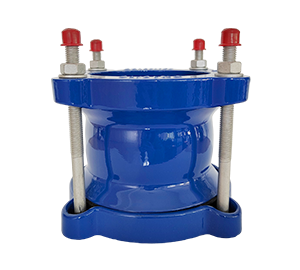
Pipe fittings are used to connect different sections of pipes, change the direction of the pipeline, or branch off the main pipeline. They come in various shapes and sizes, such as elbows, tees, and couplings. In a water system, pipe fittings allow for the creation of a complex network that can adapt to different layouts and requirements. For example, an elbow fitting can change the direction of a water pipeline to navigate around an obstacle in a building’s infrastructure.
Pipe fittings are used throughout the water system, from the initial construction of the pipeline network in a new development to the modification and expansion of existing water systems.
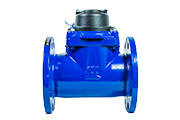
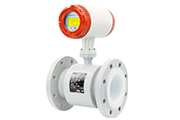
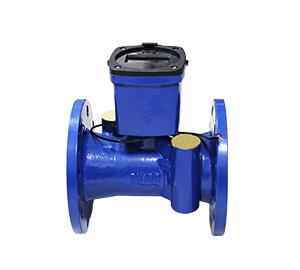
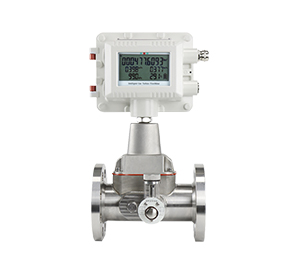
Flow meters measure the volume or mass of water flowing through a pipeline. This information is crucial for monitoring and managing the water system. In a water treatment plant, flow meters can help operators determine the amount of water being treated, which is important for adjusting chemical dosages and ensuring the proper operation of treatment processes. In a municipal water supply, flow meters can be used to measure water consumption for billing purposes.
Flow meters are installed at key points in the water system, such as at the intake of a water treatment plant, at the outlet of a pumping station, and at the connection points to different consumers in a distribution network.

Leakage: Customers often face issues with leakage from valves, pipe fittings, or gaskets. This can be due to improper installation, wear and tear, or incorrect selection of components.
Inefficient Flow Control: Incorrectly sized or malfunctioning valves can lead to inefficient flow control, resulting in either too much or too little water reaching the desired location.
Clogging: Filters may become clogged over time, reducing the flow of water and potentially damaging downstream components.
Pressure Issues: High or low water pressure can cause problems for end – users, from damaged equipment to poor water flow.
Gate Valves: When choosing a gate valve, consider the pipeline diameter, the required flow rate, and the pressure rating of the system. For large – diameter pipelines with high – volume flow requirements, a full – port gate valve is often a good choice.
Butterfly Valves: Select a butterfly valve based on the flow control requirements. If precise throttling is needed, look for a valve with a good control characteristic. Also, consider the pressure and temperature ratings of the valve.
Check Valves: The type of check valve (e.g., swing check, lift check) should be chosen based on the flow rate, pressure, and the potential for backflow in the system. For high – velocity flows, a lift check valve may be more suitable.
Exhaust Valves: Size the exhaust valve according to the volume of air that may accumulate in the pipeline. Consider the location of installation, as it should be at the highest point of the pipeline section.
Filters: Choose a filter with an appropriate filtration rating based on the type and size of impurities in the water. Also, consider the flow rate capacity of the filter to ensure it does not cause a significant pressure drop.
Pressure – Reducing Valves: Determine the inlet and outlet pressure requirements of the system to select the right pressure – reducing valve. Consider the flow rate and the type of control mechanism (e.g., direct – acting or pilot – operated).
Gaskets: Select gaskets based on the type of connection, the pressure and temperature of the system, and the chemical compatibility with the water.
Pipe Fittings: Choose pipe fittings based on the pipeline material, the required connection type (e.g., threaded, welded), and the angle or configuration needed for the pipeline layout.
Flow Meters: Consider the accuracy requirements, the type of flow measurement (e.g., volumetric or mass – based), and the compatibility with the pipeline diameter and fluid properties when selecting a flow meter.
A: While gate valves can be used to partially close the flow, they are not ideal for precise flow regulation. Their design is more suited for full – open or full – closed positions. For flow regulation, butterfly valves or globe valves are better options as they offer more precise control over the flow rate.
A: If an exhaust valve fails, air will accumulate in the pipeline. This can lead to reduced water flow, increased energy consumption in pumps, and potential water hammer effects. In severe cases, it can cause damage to the pipeline and other components in the water system.
📩 Contact WEIZIDOM for Project Cooperation
Interested in high-quality valves, pipes, or custom fluid solutions for your agricultural or water project?
👉 Email: eileen@wsdvalves.com
🌐 Website: https://www.wsdvalves.com